
This time, it’s a simple Deck of Cards object-oriented design problem, which is commonly asked by gaming companies like Roblox. Although it’s straightforward and easy to understand, there are plenty of aspects to delve into.
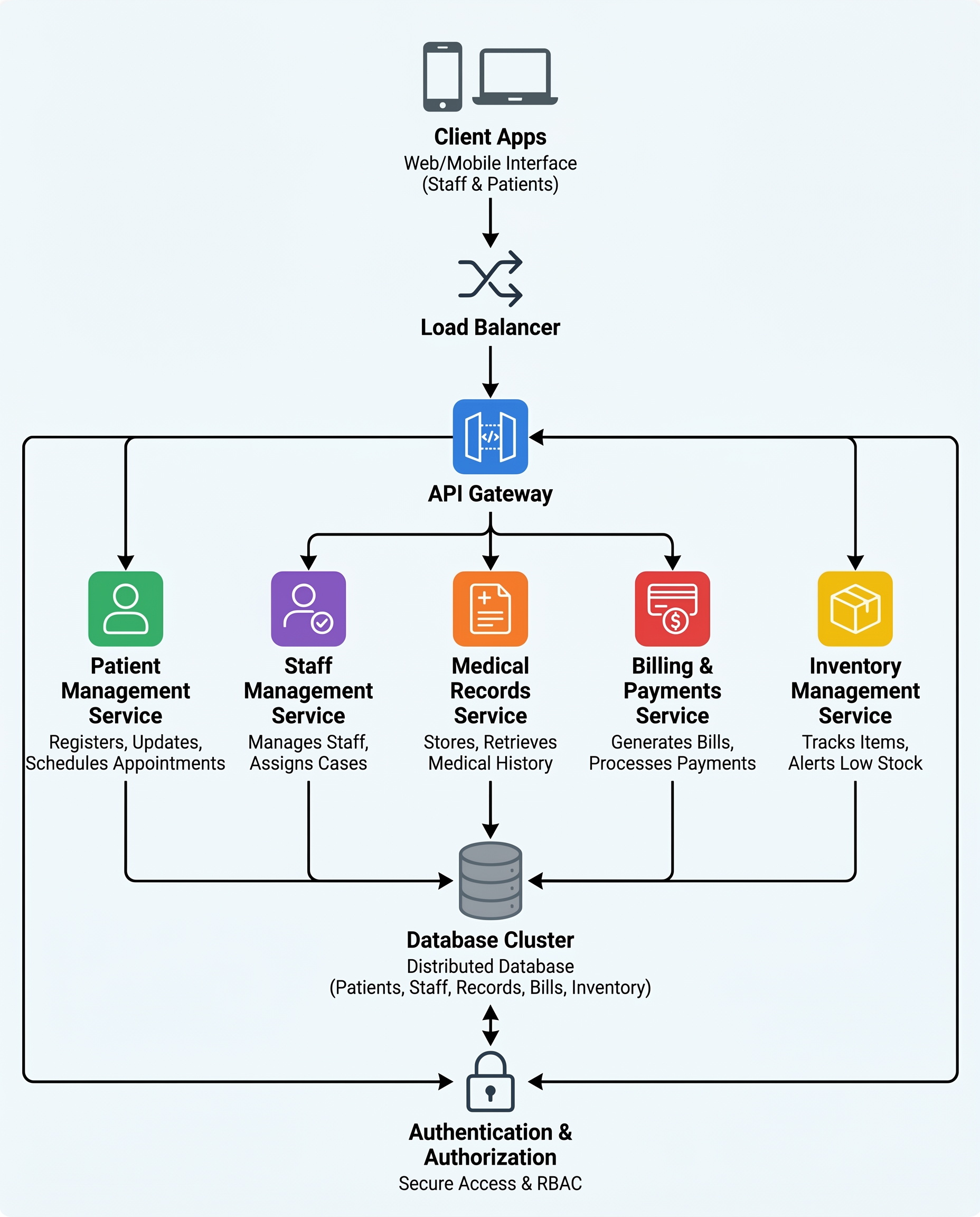
System Design Diagram — Design Deck of Cards
Card Representation
Data Structure
Choosing the Right Structure Representing cards in a card game system demands a balance between simplicity and extensibility. A simple string representation like “Ace of Spades” is readable but impractical for advanced operations such as sorting, comparison, or serialization. Instead, representing cards as structured entities provides the following benefits:
- Flexibility in Comparisons: Structured representation allows for direct rank and suit comparisons without additional parsing.
- Encapsulation of Logic: Cards can encapsulate methods to evaluate values, compare ranks, or determine their effects within a game.
- Future Extensibility: Structured representations make it easier to introduce game-specific features, such as custom card attributes or new suits.
For instance, a card can be represented as:
class Card:
def __init__(self, rank, suit):
self.rank = rank
self.suit = suit
def __repr__(self):
return f"{self.rank} of {self.suit}"
def compare(self, other_card):
# Comparison logic here
return self.rank - other_card.rank
Enum or Class
Using Enums for Suit and Rank Enums enhance clarity and enforce constraints by limiting the values suits and ranks can take. For instance, enumerating suits as HEARTS, SPADES, DIAMONDS, and CLUBS ensures that any invalid entry is caught early. Similarly, enumerating ranks provides an ordered structure, which is vital for operations like sorting or evaluating card hierarchies.
Advantages of Enums
- Improves readability and reduces the likelihood of errors.
- Facilitates game-specific customizations, such as introducing new ranks (e.g., “Joker”) or suits.
- Simplifies comparison logic by leveraging ordinal values or custom ranking definitions.
from enum import Enum
class Suit(Enum):
HEARTS = "Hearts"
DIAMONDS = "Diamonds"
CLUBS = "Clubs"
SPADES = "Spades"
class Rank(Enum):
TWO = 2
THREE = 3
ACE = 14
Serialization
Importance of Serialization Serialization allows cards to be stored persistently or transmitted between systems in multiplayer games. Card serialization must:
- Preserve Uniqueness: Ensure that each card’s identity remains distinct across deserialization.
- Remain Extensible: Allow additional properties to be included without breaking compatibility.
- Minimize Overhead: Balance verbosity (e.g., JSON) with efficiency (e.g., binary formats).
import json
class Card:
def to_json(self):
return json.dumps({"rank": self.rank, "suit": self.suit})
@staticmethod
def from_json(json_str):
data = json.loads(json_str)
return Card(data["rank"], data["suit"])
Deck Operations
Shuffle Algorithm
Fisher-Yates Algorithm The Fisher-Yates shuffle is widely regarded as the gold standard for shuffling due to its uniform distribution. Each permutation of the deck has an equal probability, making it both fair and predictable from a statistical standpoint.
Key considerations when implementing the algorithm:
- Randomness Source: The quality of the random number generator significantly impacts the shuffle’s fairness. Pseudorandom generators may suffice for casual games but should be tested for bias.
- In-Place Modification: Fisher-Yates performs the shuffle in-place, optimizing for memory usage.
- Scalability: The algorithm operates in O(n) time complexity, making it efficient even for large decks or multi-deck configurations.
import random
def fisher_yates_shuffle(deck):
for i in range(len(deck) - 1, 0, -1):
j = random.randint(0, i)
deck[i], deck[j] = deck[j], deck[i]
Draw and Discard
Designing Draw and Discard Mechanics Decks in card games often involve dynamic interactions such as drawing and discarding cards. These operations should be designed with the following principles:
- Atomicity: Ensure that a draw or discard operation completes without interference in concurrent environments.
- Reshuffling Logic: Automatically reshuffle the discard pile into the draw pile when the latter is depleted. Implement safeguards to prevent infinite reshuffling loops.
- State Integrity: Maintain clear boundaries between draw and discard piles, with proper auditing to detect anomalies.
class Deck:
def __init__(self, cards):
self.draw_pile = cards
self.discard_pile = []
def draw(self):
if not self.draw_pile:
self.reshuffle()
return self.draw_pile.pop()
def discard(self, card):
self.discard_pile.append(card)
def reshuffle(self):
self.draw_pile = self.discard_pile[:]
self.discard_pile = []
fisher_yates_shuffle(self.draw_pile)
Handling Multiple Decks
In games requiring multiple decks (e.g., Blackjack with shoe decks), you may implement:
- Deck Isolation: Treat each deck as an independent entity until they are explicitly combined.
- Efficient Merging: Combine multiple decks while preserving randomness and integrity.
- Context-Specific Splitting: Split combined decks back into their original configurations if required.
Game Rules and Logic
Game Variants
Supporting Multiple Game Types Designing for flexibility in rules is essential to accommodate diverse card games. A modular approach involves creating a rule engine that:
- Centralizes Rule Definitions: Define all game-specific rules in a single module or service.
- Allows Overrides: Enable games to extend or override base rules for custom scenarios.
- Decouples Logic: Separate rules from gameplay mechanics, reducing the risk of entanglements and making debugging easier.
For example, a rule engine could define hooks like evaluate_hand or resolve_turn, which games like Poker or Bridge can implement differently.
class Game:
def __init__(self, players):
self.players = players
def setup(self):
raise NotImplementedError
def evaluate_winner(self):
raise NotImplementedError
class Poker(Game):
def setup(self):
# Initialize poker-specific setup
pass
def evaluate_winner(self):
# Implement poker-specific winning logic
pass
Scoring System
Generic Scoring Framework Scoring mechanisms should be abstracted to support game-specific variations. A scoring framework might:
- Normalize Inputs: Standardize how scores are calculated across games to ensure consistency.
- Support Composite Metrics: Combine multiple factors (e.g., card values, hand combinations) to calculate scores dynamically.
- Incorporate Weighting: Assign different weights to scoring components based on game rules (e.g., in Poker, a “Royal Flush” scores higher than a “Full House”).
Player Interaction
Turn Management
Managing turns is critical in multiplayer settings. A robust turn manager should:
- Ensure Fairness: Maintain a consistent turn order, with mechanisms to handle skipped or forfeited turns.
- Support Dynamic Changes: Adjust turn order dynamically in response to game rules or player actions (e.g., reverse order in Uno).
- Handle Concurrency: Synchronize actions across clients to prevent race conditions, especially in real-time games.
from collections import deque
class TurnManager:
def __init__(self, players):
self.turns = deque(players)
def next_turn(self):
player = self.turns.popleft()
self.turns.append(player)
return player
Real-Time Communication
Real-time interaction introduces latency and synchronization challenges. Strategies to mitigate these include:
- Event-Based Updates: Use event-driven architectures to notify players of state changes without unnecessary polling.
- State Snapshots: Periodically synchronize the entire game state to ensure all players have a consistent view.
Concurrency and Performance
Thread Safety
Concurrency issues often arise in multiplayer environments, where multiple players interact with shared resources. To ensure thread safety:
- Use Synchronization Primitives: Employ locks, semaphores, or mutexes to serialize access to critical sections.
- Leverage Atomic Operations: Minimize contention by relying on atomic operations where applicable.
- Design for Scalability: Avoid global locks, which can become bottlenecks as player counts increase.
Scalability
Scalability involves designing systems to handle increasing workloads gracefully. Key strategies include:
- Efficient Resource Allocation: Optimize memory and compute usage, especially for resource-intensive features like AI opponents.
- Load Distribution: Distribute game instances or sessions across servers to prevent overloading a single node.
- Incremental Expansion: Design systems to scale out horizontally by adding more nodes rather than vertically by upgrading existing ones.
Full Answer in bugfree.ai

System Design Answer — Design Deck of Cards
About the author
bugfree.ai is an advanced AI-powered platform designed to help software engineers master system design and behavioral interviews. Whether you’re preparing for your first interview or aiming to elevate your skills, bugfree.ai provides a robust toolkit tailored to your needs. Key Features:
150+ system design questions: Master challenges across all difficulty levels and problem types, including 30+ object-oriented design and 20+ machine learning design problems. Targeted practice: Sharpen your skills with focused exercises tailored to real-world interview scenarios. In-depth feedback: Get instant, detailed evaluations to refine your approach and level up your solutions. Expert guidance: Dive deep into walkthroughs of all system design solutions like design Twitter, TinyURL, and task schedulers. Learning materials: Access comprehensive guides, cheat sheets, and tutorials to deepen your understanding of system design concepts, from beginner to advanced. AI-powered mock interview: Practice in a realistic interview setting with AI-driven feedback to identify your strengths and areas for improvement.
bugfree.ai goes beyond traditional interview prep tools by combining a vast question library, detailed feedback, and interactive AI simulations. It’s the perfect platform to build confidence, hone your skills, and stand out in today’s competitive job market. Suitable for:
New graduates looking to crack their first system design interview. Experienced engineers seeking advanced practice and fine-tuning of skills. Career changers transitioning into technical roles with a need for structured learning and preparation.
Comments
Join the discussionNo comments yet. Be the first to comment.