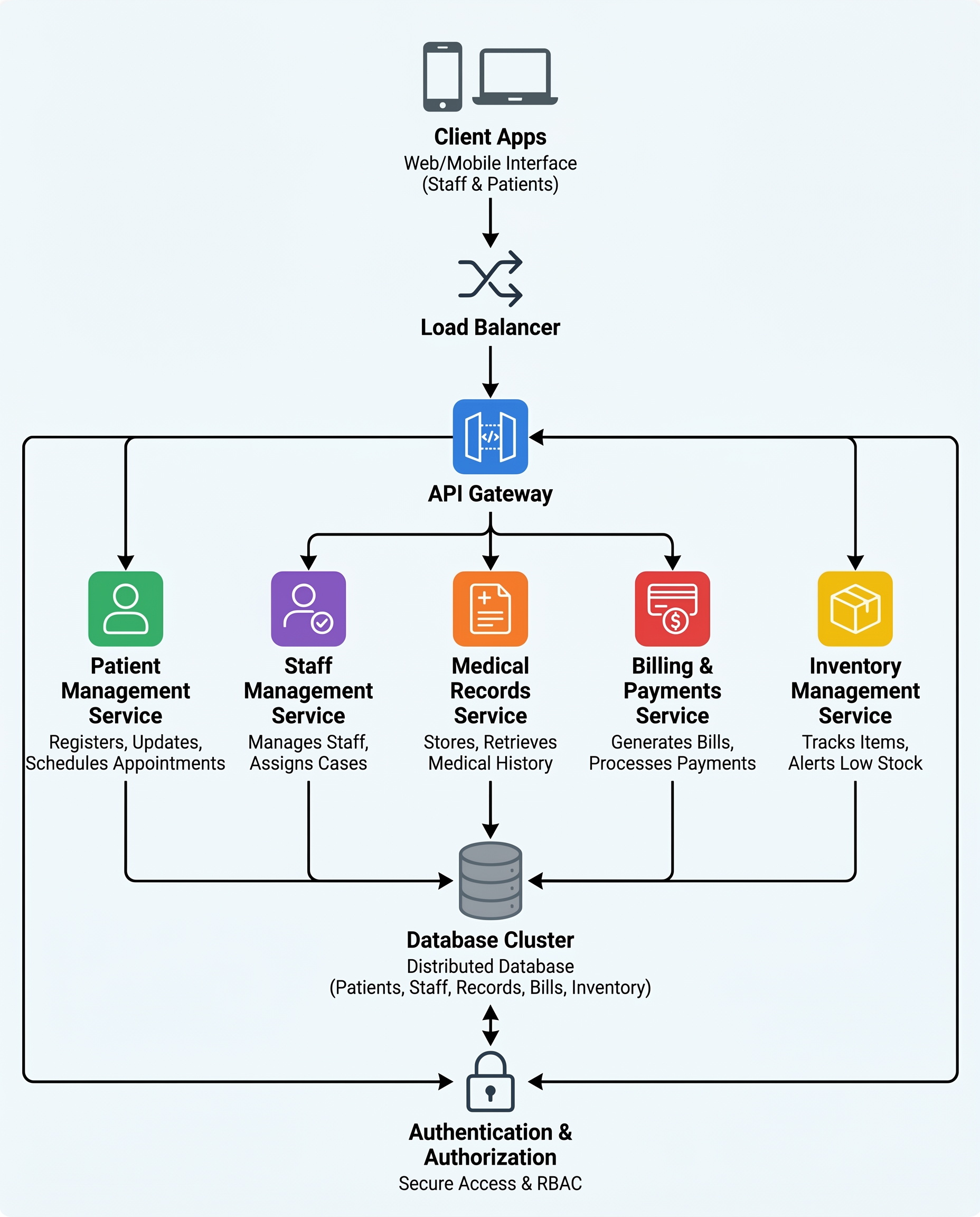

The mock interview is with a Meta Senior Eng, it is good that the engineer bought up most of the key points of the system design problem.
System Design Diagram — Design a Conference Room Booking System
Key points as followings:
1. Availability and Scheduling
Room Availability
Real-time room availability must reflect accurately across all users and clients.
Real-Time Updates:
- Implement a publish-subscribe model where changes in room availability (e.g., a new booking, cancellation, or modification) are published as events.
- Maintain an in-memory distributed event queue to propagate these events to all subscribed clients. This ensures updates are pushed immediately, reducing polling overhead.
- Synchronize changes across a distributed system using consensus protocols like Paxos or Raft to ensure consistency when multiple servers are handling room states.
Centralized Availability State:
- Store availability data in a high-performance in-memory database. For each room, maintain a record of current bookings indexed by time slots.
- Use atomic operations to update this state, ensuring that simultaneous attempts to book the same room are handled in a thread-safe manner.
Calendar Integration:
- Design an abstraction layer for calendar management, where each user’s personal schedule and room bookings are merged.
- Use a conflict-resolution mechanism (detailed below) to handle overlapping entries when merging schedules dynamically.
Conflict Resolution
Efficient conflict detection and resolution are critical for ensuring data integrity during booking operations.
Automated Conflict Detection:
- Implement a range-based query system to check for overlaps. When a user attempts a booking, query the room’s schedule for the desired time range.
- Ensure the query operation is transactionally consistent, using row-level locking to prevent race conditions in overlapping time checks.
- Use a quorum-based write mechanism to confirm that the booking does not conflict across distributed nodes before committing.
Resolution Mechanisms:
- Suggest alternative time slots or rooms by:
- Querying adjacent time slots for availability in the same room.
- Identifying nearby rooms with similar configurations within the same time slot.
- Maintain a scoring mechanism for alternatives, considering proximity, user preferences, and historical booking patterns, to rank suggestions.
Time Zone Handling
Time zones are a complex aspect, especially for systems used globally.
Time Zone Storage:
- Store all booking times in a universal format, such as UTC, in the backend.
- Include metadata about the user’s local time zone with each request, allowing the backend to interpret and store times correctly.
Conversion Mechanisms:
- At the display layer, calculate the user’s local time by applying timezone offsets and daylight saving rules.
- Maintain a precomputed offset table for common time zones to optimize conversions during runtime.
2. User Management and Access Control [Optional]
Note: This topic is optional if you are not familiar to user access control.
User Roles
Role-based permissions define access and functionality for different users.
Role Management:
- Create a database schema where roles are stored as distinct entities, each associated with a set of permissions.
- Implement an access control matrix that maps roles to resources (e.g., rooms, schedules) and actions (e.g., read, write, delete).
Dynamic Role Assignment:
- Assign roles dynamically based on user context. For example, grant elevated privileges temporarily when a user is designated as an administrator for a specific room or resource.
Authentication and Authorization
User authentication ensures secure access, while authorization enforces permissions.
Authentication Mechanism:
- Use hashed credentials and store salted hashes in the database. During login, verify the credentials by hashing the input and comparing it to the stored value.
- Manage user sessions with signed tokens that include an expiration time to minimize security risks from stale sessions.
Authorization Logic:
- Evaluate user permissions at each endpoint by checking the token against the access control matrix.
- Implement a hierarchical evaluation where permissions can cascade (e.g., an organization admin inherits all permissions of a room admin).
Guest Access
External users often require temporary, limited access.
Time-Limited Access Tokens:
- Generate unique, non-reusable access tokens for guests with embedded metadata, such as expiration times and allowed actions.
- Store a server-side record of issued tokens for validation, ensuring the system can revoke or expire tokens when necessary.
Scoped Permissions:
- Define a minimal set of actions (e.g., view-only) that guests can perform. Include this scope in the token payload to ensure compliance across the system.
3. Scalability and Performance
Load Handling
The system must maintain consistent performance even under high traffic.
Request Distribution:
- Use a hash-based partitioning scheme to distribute requests across multiple servers. For example, partition rooms by IDs to ensure that related requests are handled by the same server.
- Maintain a routing table at the entry point of the system to direct incoming requests to the appropriate partitions.
Dynamic Resource Allocation:
- Monitor system load using metrics such as response time, request rates, and resource usage. Dynamically provision additional resources (e.g., servers or threads) when predefined thresholds are exceeded.
Database Optimization
Efficient data access ensures minimal latency during operations.
Indexing Strategies:
- For booking data, use composite indexes on room ID and time range fields to enable efficient range queries.
- Periodically analyze query patterns and optimize indexes based on frequency and complexity.
Data Partitioning:
- Partition the booking table by date or region to limit the size of individual partitions. This ensures faster lookups and reduces contention.
Horizontal Scaling
Scaling the system horizontally allows it to handle increased demand.
Stateless Services:
- Design services to be stateless, with all session or user-specific data stored in a distributed session store or included in requests. This allows any instance of a service to handle any request.
Data Replication:
- Implement asynchronous replication for read-heavy workloads. For example, replicate room availability data across nodes, with updates propagated asynchronously to ensure consistency.
4. Notifications and Reminders
Notification Channels
Effective notifications require real-time and scheduled delivery mechanisms.
Real-Time Delivery:
- Use a message queue system to handle notification events. Producers (e.g., booking services) enqueue messages, and notification workers consume them to send notifications.
- Maintain user-specific delivery preferences in a lookup table, ensuring that messages are sent via the preferred channel (e.g., email, SMS).
Failover Mechanisms:
- Implement retry logic for undelivered notifications. Store pending messages in a queue and periodically attempt re-delivery.
Reminder Scheduling
Reminders improve user engagement by prompting timely actions.
Batch Processing:
- Use a background job scheduler to periodically query upcoming bookings and send reminders in batches, reducing the system’s real-time load.
- Store reminder configurations (e.g., timing and method) alongside booking details for easy retrieval.
Dynamic Timing:
- Calculate optimal reminder times based on booking details. For example, for meetings involving multiple time zones, send reminders adjusted to each participant’s local time.

System Design Solution — Design a Conference Room Booking System
About the author
bugfree.ai is an advanced AI-powered platform designed to help software engineers master system design and behavioral interviews. Whether you’re preparing for your first interview or aiming to elevate your skills, bugfree.ai provides a robust toolkit tailored to your needs. Key Features:
150+ system design questions: Master challenges across all difficulty levels and problem types, including 30+ object-oriented design and 20+ machine learning design problems. Targeted practice: Sharpen your skills with focused exercises tailored to real-world interview scenarios. In-depth feedback: Get instant, detailed evaluations to refine your approach and level up your solutions. Expert guidance: Dive deep into walkthroughs of all system design solutions like design Twitter, TinyURL, and task schedulers. Learning materials: Access comprehensive guides, cheat sheets, and tutorials to deepen your understanding of system design concepts, from beginner to advanced. AI-powered mock interview: Practice in a realistic interview setting with AI-driven feedback to identify your strengths and areas for improvement.
bugfree.ai goes beyond traditional interview prep tools by combining a vast question library, detailed feedback, and interactive AI simulations. It’s the perfect platform to build confidence, hone your skills, and stand out in today’s competitive job market. Suitable for:
New graduates looking to crack their first system design interview. Experienced engineers seeking advanced practice and fine-tuning of skills. Career changers transitioning into technical roles with a need for structured learning and preparation.
Comments
Join the discussionNo comments yet. Be the first to comment.