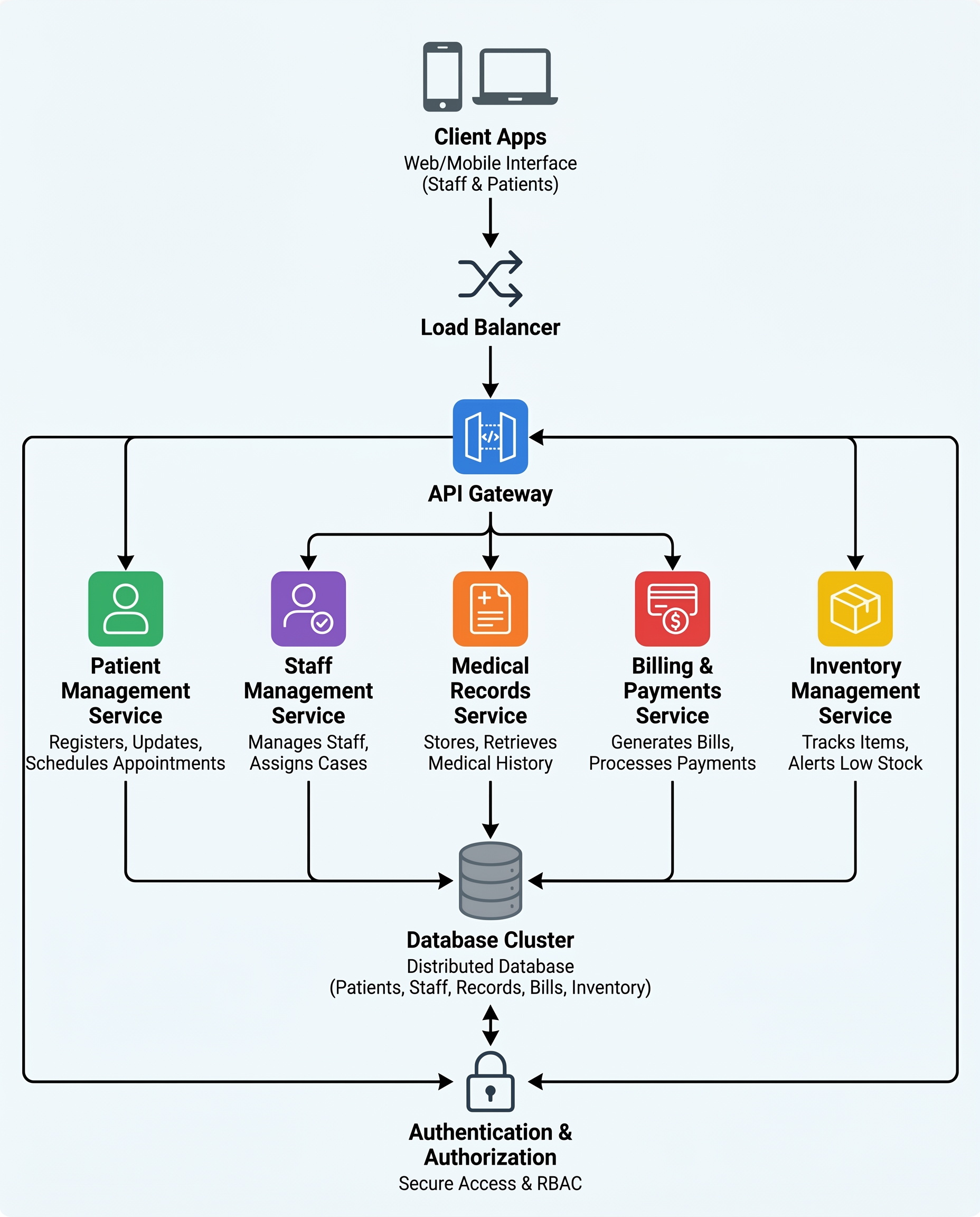

Designing a banking system requires a deep understanding of distributed systems, concurrency, consistency, and secure state management. Below, we unpack each major component with detailed implementation mechanics that underlie a robust and scalable system.
1. Account Management
Designing for Multiple Account Types
A common strategy is to use inheritance or composition to model different account behaviors. A typical design:
AbstractAccount
├── SavingsAccount
├── CheckingAccount
└── CreditAccount
Each subclass implements operations such as withdraw(), deposit(), and calculateInterest() differently.
However, using polymorphism at runtime requires thoughtful encapsulation of business rules. For example, withdrawals from a CreditAccount may need additional checks for credit limits. You may also want to represent account metadata in a normalized schema like this:
Accounts Table
- account_id (PK)
- user_id (FK)
- account_type (ENUM: savings, checking, credit)
- status (ENUM: active, frozen, closed)
- balance
- interest_rate
Interest accrual can be implemented via a scheduled background job that iterates over accounts, calculating:
This operation must be idempotent and track the last applied timestamp to avoid duplicate accruals.
interest = balance × interest_rate × (days_since_last_calculation / 365)
Ensuring Secure User Authentication
Authentication must be fail-safe and resilient to replay attacks and credential theft.
A typical mechanism stack:
- Password-based auth: Store passwords hashed with salts using algorithms like
bcryptorargon2. - Token-based sessions: Issue short-lived JWTs, optionally rotating refresh tokens every N hours.
- MFA: Implement TOTP-based second factors using RFC 6238. On server side, store the shared secret securely and validate tokens with a ±30s window.
- Session Hijack Protection: Regenerate session identifiers on login and track device fingerprints or IP shifts.
Login flow example:
[User submits credentials] → [Password Check] → [MFA Challenge] → [Token Issuance]
All operations must be logged with traceable metadata (IP, User-Agent, geolocation if applicable).
Handling Account Operations
Operations like freezing an account should follow a state machine pattern. For example:
States: Active → Frozen → Closed
Allowed Transitions:
Active → Frozen
Frozen → Active
Active/Frozen → Closed
This can be enforced via application logic or database triggers to ensure invariant consistency.
Implementing event sourcing? A log-based structure like this:
{
"event_type": "ACCOUNT_FROZEN",
"account_id": "123",
"timestamp": "2025-04-04T10:00:00Z",
"metadata": { "reason": "Suspicious activity" }
}
Each operation becomes an event, and the current state is derived by replaying all events. This enables temporal debugging (“What was the state at time T?”) and full auditability.
2. Transaction Processing
Ensuring Transaction Consistency and Atomicity
Transactional correctness is critical. All operations must honor the ACID properties. For single-node systems, relational databases handle this inherently. For distributed or microservice systems, more nuance is needed.
- 2PC (Two-Phase Commit):
- Prepare Phase: All participants vote to commit or abort.
- Commit Phase: Coordinator finalizes based on votes.
- Downside: Can block if a participant crashes.
- Saga Pattern: Each operation in a saga has a corresponding compensating transaction.
[Debit A] → [Credit B]
↑ ↑
[Undo Debit A] [Undo Credit B
If credit fails, the saga invokes the “undo debit” step to maintain balance.
State transitions in the saga must be stored persistently so they can be resumed in case of failure (e.g., via a saga log table).
Managing Concurrent Transactions
Banking systems often run under high contention. For concurrency control:
- Optimistic Locking: Add a
versionfield to each row. During updates, use: UPDATE accounts SET balance = balance - 100, version = version + 1 WHERE account_id = 123 AND version = 7;- If affected rows = 0, a concurrent modification occurred → retry.
- Pessimistic Locking: Use row-level locks:
SELECT ... FOR UPDATE. Best for high-value, low-volume updates.
Deadlock detection is essential. For example, always lock rows in a canonical order (e.g., ascending account_id) to avoid cyclical waits.
Designing Real-Time Fraud Detection
A practical approach
- Rule-based engine: Fast filters like “more than X transactions in Y minutes”, or “transfer to blacklisted country”.
Streaming anomaly detection:
Maintain rolling statistics per user (e.g., median transfer size, login time ranges).
Use distance metrics (Euclidean, Mahalanobis) to score outliers.
Feature extraction pipeline: Convert raw events into structured features
{ "txn_amount": 500, "hour_of_day": 23, "device_id_mismatch": true, "geolocation_change": true }
Deploy lightweight models in a streaming architecture (e.g., per-user fraud score with thresholding) that raise alerts or block transactions temporarily.
3. Data Storage and Security
Securing Stored Data
Use a data encryption hierarchy:
- Envelope Encryption:
- Each data record encrypted with a unique Data Encryption Key (DEK).
- DEKs are encrypted with a Master Key.
- Master Key stored in Hardware Security Module (HSM) or equivalent.
All sensitive fields (e.g., SSNs, card numbers) should be encrypted at column level.
Key rotation strategies must support re-encryption in place or dual-decryption (old + new key during transition).
Choosing the Right Database
Relational databases remain the gold standard for:
- ACID transactions
- Referential integrity
- Strong schema enforcement
For append-only systems like logs or event stores:
- Use wide-column or log-structured merge-tree stores (e.g., LevelDB-style architecture).
- Benefits: fast sequential writes, compaction for reads.
Sharding by user_id % N can horizontally scale reads/writes while preserving locality per user.
Data Backup and Recovery
Backups must be:
- Incremental: Store only diffs since last backup.
- Consistent Snapshots: Use write-ahead logs to restore to a transactionally consistent state.
- Tested: Regular DR drills to verify restore scripts.
Recovery point objective (RPO) and recovery time objective (RTO) should be defined per data tier.
4. Scalability and Performance
Designing Load Balancing Mechanisms
Internal request routing can be layered:
- L7 load balancer: Routes based on URL paths or headers (e.g.,
/transactions → txn-service) - Connection-aware: Sticky sessions via consistent hashing (
user_id % N) ensure request affinity.
Maintain session state in a distributed cache if needed for sticky-less routing.
Real-Time System Monitoring
Monitoring should capture:
- Latency percentiles (P50, P95, P99)
- Error rates per API route
- Resource saturation (CPU, memory, disk IOPS)
Introduce circuit breakers for downstream service calls — stop retrying failing endpoints until they recover. This prevents cascading failures.
Designing for Future Expansion
Modular design principles:
- Services communicate via asynchronous messaging (e.g., publish-subscribe model)
- Schema evolution handled via versioned contracts (e.g.,
TransactionV1,TransactionV2structs). - Database migrations performed in phases:
- Add new fields (non-breaking)
- Populate in background
- Switch logic
- Drop old fields
Full Answer: https://bugfree.ai/practice/system-design

About the author
bugfree.ai is an advanced AI-powered platform designed to help software engineers master system design and behavioral interviews. Whether you’re preparing for your first interview or aiming to elevate your skills, bugfree.ai provides a robust toolkit tailored to your needs. Key Features:
150+ system design questions: Master challenges across all difficulty levels and problem types, including 30+ object-oriented design and 20+ machine learning design problems. Targeted practice: Sharpen your skills with focused exercises tailored to real-world interview scenarios. In-depth feedback: Get instant, detailed evaluations to refine your approach and level up your solutions. Expert guidance: Dive deep into walkthroughs of all system design solutions like design Twitter, TinyURL, and task schedulers. Learning materials: Access comprehensive guides, cheat sheets, and tutorials to deepen your understanding of system design concepts, from beginner to advanced. AI-powered mock interview: Practice in a realistic interview setting with AI-driven feedback to identify your strengths and areas for improvement.
bugfree.ai goes beyond traditional interview prep tools by combining a vast question library, detailed feedback, and interactive AI simulations. It’s the perfect platform to build confidence, hone your skills, and stand out in today’s competitive job market. Suitable for:
New graduates looking to crack their first system design interview. Experienced engineers seeking advanced practice and fine-tuning of skills. Career changers transitioning into technical roles with a need for structured learning and preparation.
Comments
Join the discussionNo comments yet. Be the first to comment.