High-score (Bugfree users) Interview Experience: Oracle OCI Software Engineer — What They Really Test
This is a concise, practical breakdown of a high-scoring (Bugfree users) Oracle OCI Software Engineer interview — what was actually asked, how the rounds were structured, and how to prepare so you can focus on the right topics.
Quick overview
The process was end-to-end and covered four broad areas:
- Screening: fundamentals in CS, backend, web basics and data/DB concepts
- Loop rounds: deeper system design, project walkthroughs, and coding
- Coding: LeetCode-style algorithm problems during loops
- Behavioral: ownership, on-call incidents, impact and learning from mistakes
Below I expand each area, list example questions, and give practical prep tips.
Screening round — what they test
The screening focused on core fundamentals and quick conceptual checks.
Key topics asked:
CS & backend fundamentals
- Mutex vs semaphore — when to use each and the difference in counting behavior
- sleep vs wait in Java — thread scheduling vs monitor release
- Optimistic vs pessimistic locking — tradeoffs and use cases
Web basics
- HTTPS fundamentals (TLS handshake, certificates)
- Why use Tomcat (servlet container, deployment model)
- Why Protobuf (compact binary format, forward/backward compatibility, speed)
Data and DB concepts
- DynamoDB: LSI vs GSI — local vs global secondary indexes and partitioning implications
- Communication protocols: HTTP/1.1 vs HTTP/2 vs gRPC (streaming, multiplexing, binary framing)
Screening is usually fast — show you can reason clearly, avoid overlong answers, and give tradeoffs.
Loop rounds — deeper focus
Loop (onsite) rounds probed design, scalability, testing, and coding.
System design & project walkthrough
- Expect a walkthrough of a past project: architecture, tradeoffs, scaling decisions, and testing strategies.
- Scaling questions: load balancing, caching, sharding, partition keys, rate limiting, failover and observability.
- Testing/operational concerns: unit/integration tests, canary/blue-green deployment, monitoring, SLO/SLI and alerting.
Coding
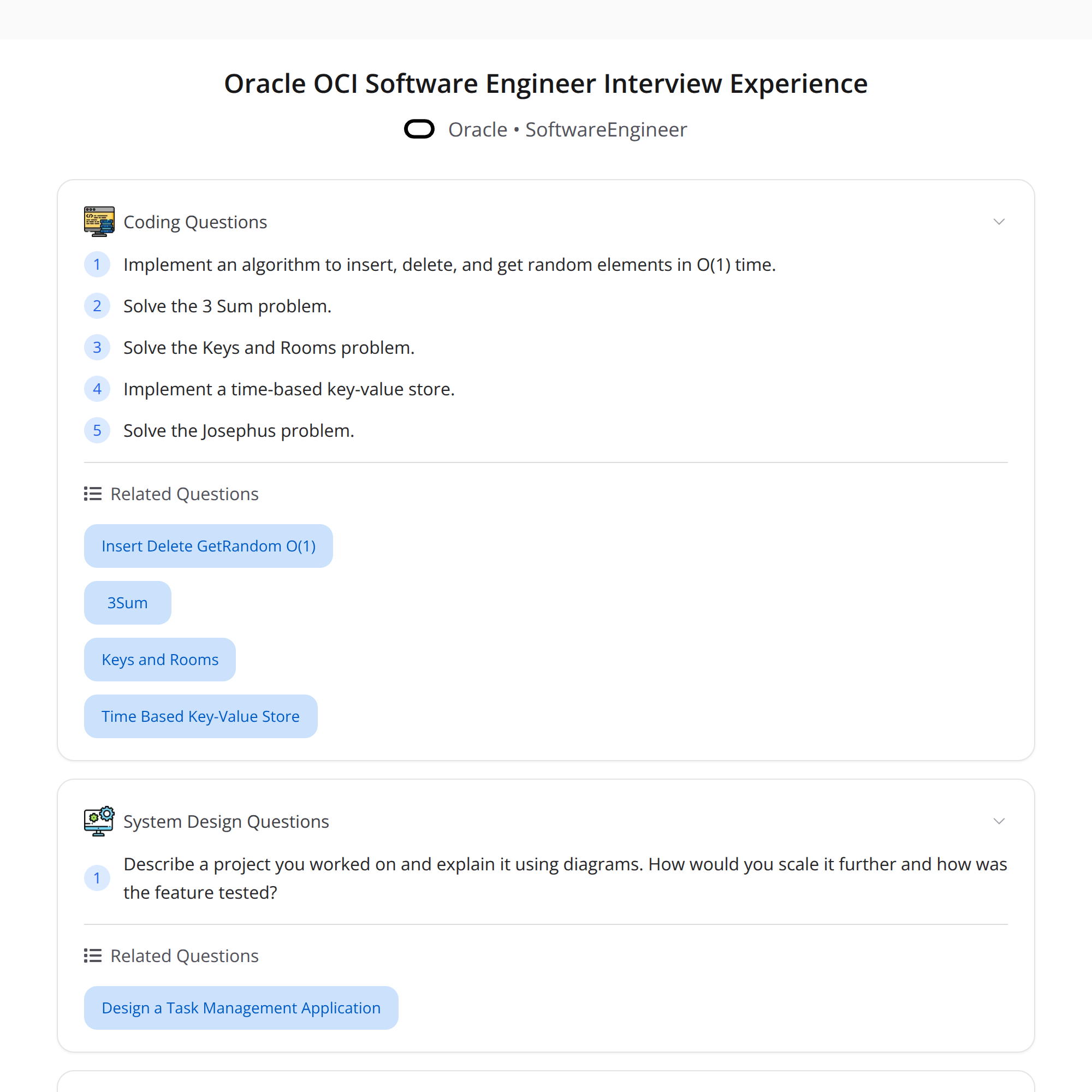
- LeetCode-style problems focusing on clarity, time/space complexity, edge cases and correctness.
- Common problem types: arrays, strings, trees/graphs (BFS/DFS), dynamic programming, two-pointers, sliding window.
Loop rounds evaluate both system-level judgement and hands-on problem solving.
Behavioral — as important as technical
Behavioral questions measured ownership, learning, and real-world impact. Common themes:
- Biggest mistakes & what you learned — show humility and structured improvements.
- Impact — quantify results (latency improvements, cost reduction, user impact).
- On-call incidents — describe incident, detection, mitigation, postmortem and follow-up.
- Deployment ownership — processes you followed for safe deploys and rollbacks.
Be specific: use metrics, describe technical steps taken, and show ownership over resolution and prevention.
Sample questions (with concise answers)
Q: Mutex vs semaphore?
- A: Mutex is a binary lock for mutual exclusion (one owner). Semaphore can allow N concurrent holders — useful for resource pools.
Q: sleep() vs wait() in Java?
- A: sleep pauses a thread without releasing locks; wait releases the monitor and waits to be notified.
Q: Optimistic vs pessimistic locking?
- A: Optimistic assumes low conflict and checks on commit (good for reads); pessimistic locks resources up front to avoid conflicts (good for high contention).
Q: LSI vs GSI in DynamoDB?
- A: LSI is local to a partition key and shares the same partition key, supports alternate sort keys; GSI can index across partitions (different partition key), useful for global queries but costs differ.
Q: Why Protobuf vs JSON?
- A: Protobuf is compact, typed, and faster to parse — good for internal RPC and high-throughput services.
Q: How would you scale a service that’s CPU-bound?
- A: Profile to find hotspots, optimize critical code, add horizontal instances behind a load balancer, consider batching, and offload to worker queues.
Q: Example LeetCode problem to expect?
- A: "Given an array, find the longest subarray with sum K" — think sliding window for positives, prefix sums + hashmap when elements can be negative.
Preparation checklist (practical)
- Review concurrency basics (mutex, semaphore, locks, memory models).
- Brush up Java thread primitives if interviewing with Java.
- Read TLS/HTTPS essentials and common deployment containers (Tomcat, servlet model).
- Study Protobuf and RPC frameworks (gRPC) vs REST.
- Revisit DynamoDB concepts — partition keys, LSI/GSI behaviors, capacity modes.
- Practice medium-to-hard LeetCode problems with explanations; time-box each solve.
- Prepare 2–3 project walkthroughs with metrics and tradeoffs highlighted.
- Prepare behavioral stories using the STAR format (Situation, Task, Action, Result).
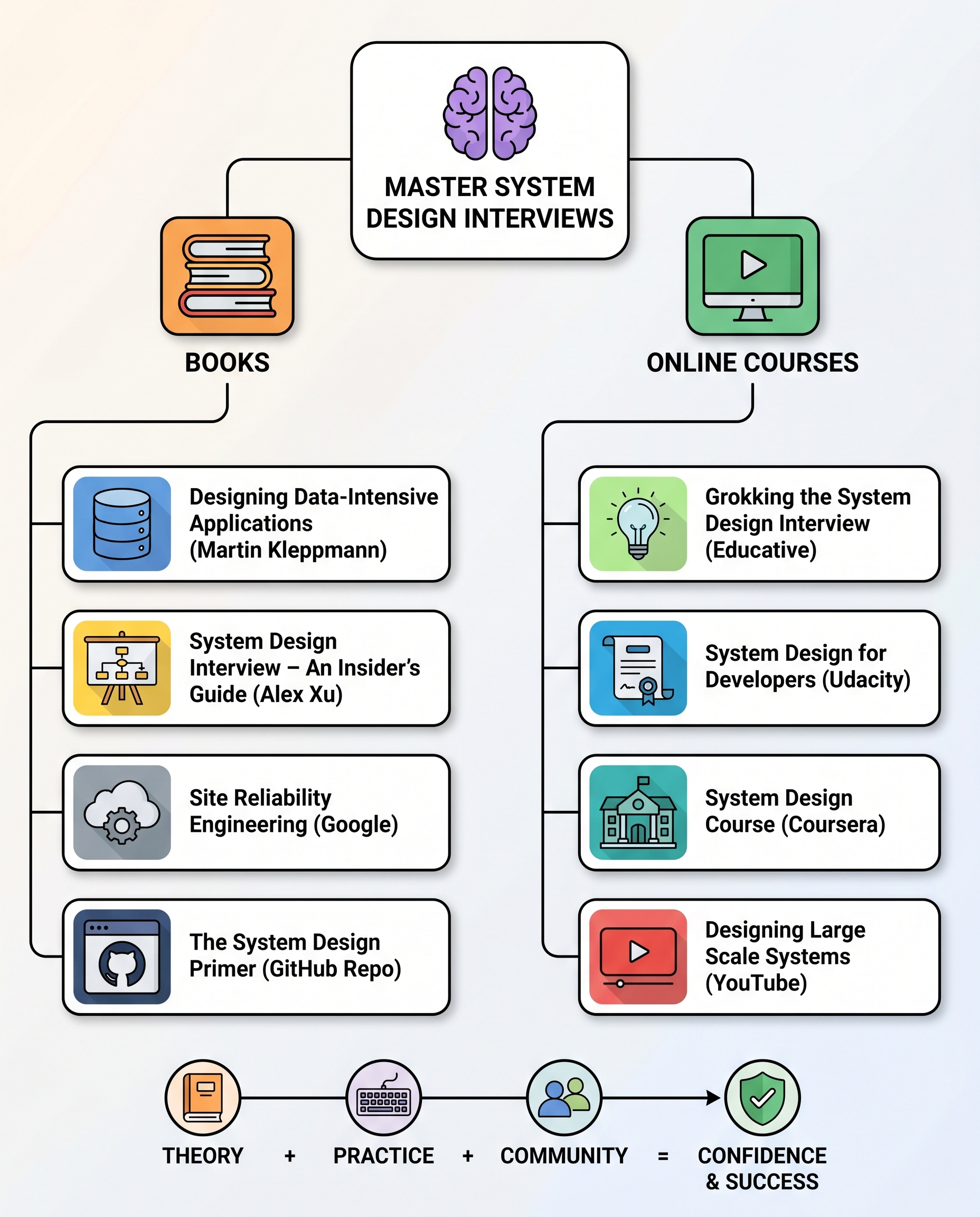
Recommended resources: System Design Primer, LeetCode (medium/hard), Cracking the Coding Interview, official OCI/AWS/DynamoDB docs.
Final tips
- Be concise and structured: state assumptions, outline your approach, and then drill into details.
- Always quantify impact in behavioral answers.
- For system design, cover API contracts, data model, scaling, caching, and failure scenarios.
- During coding, communicate thought process, handle edge cases, and run correctness checks.
Good luck — focus on fundamentals, be ready to justify tradeoffs, and demonstrate ownership in past work.
About the author
bugfree.ai is an advanced AI-powered platform designed to help software engineers master system design and behavioral interviews. Whether you’re preparing for your first interview or aiming to elevate your skills, bugfree.ai provides a robust toolkit tailored to your needs. Key Features:
150+ system design questions: Master challenges across all difficulty levels and problem types, including 30+ object-oriented design and 20+ machine learning design problems. Targeted practice: Sharpen your skills with focused exercises tailored to real-world interview scenarios. In-depth feedback: Get instant, detailed evaluations to refine your approach and level up your solutions. Expert guidance: Dive deep into walkthroughs of all system design solutions like design Twitter, TinyURL, and task schedulers. Learning materials: Access comprehensive guides, cheat sheets, and tutorials to deepen your understanding of system design concepts, from beginner to advanced. AI-powered mock interview: Practice in a realistic interview setting with AI-driven feedback to identify your strengths and areas for improvement.
bugfree.ai goes beyond traditional interview prep tools by combining a vast question library, detailed feedback, and interactive AI simulations. It’s the perfect platform to build confidence, hone your skills, and stand out in today’s competitive job market. Suitable for:
New graduates looking to crack their first system design interview. Experienced engineers seeking advanced practice and fine-tuning of skills. Career changers transitioning into technical roles with a need for structured learning and preparation.
Comments
Join the discussionNo comments yet. Be the first to comment.