
This time, the question is about desigining a food delivery system. The question is kind of hard in a way that:
- The scope is large, such as payment system, map routing system, order tracking system …
- It touches different parties: Rider, Customer …
Candidates will easily get lost when navigating these feature requirements. It is very important for the candidate to drive the conversation and lead the discussion to the domians where the candidate is most comfortable with.
Here are some of the key points.
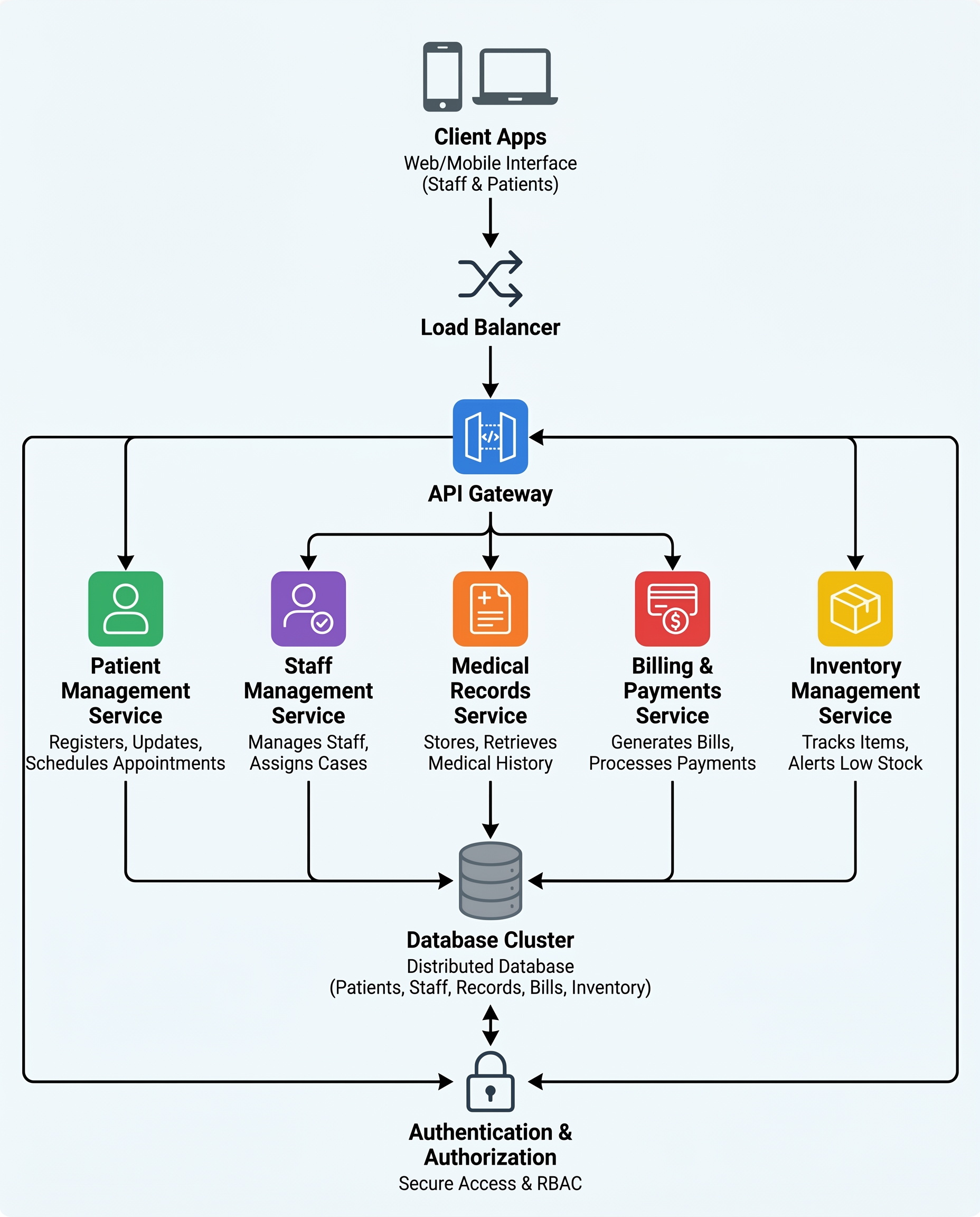
System Design Diagram — Design Food Delivery Service
1. Scalability & Performance
Scalability
Designing a system that can handle peak order volumes is critical. During peak times, such as lunch hours or special promotions, the system must efficiently manage increased traffic without degrading performance.
Horizontal Scaling:
- Horizontal scaling involves adding more servers to the system to distribute the load effectively.
- Use containerized services managed by Kubernetes or Docker Swarm. These platforms allow automatic scaling based on CPU, memory usage, or custom metrics such as request rate.
Load Balancing: Use reverse proxies configured with algorithms such as round-robin or least-connections to allocate traffic intelligently.
Partitioning: Use sharding for databases where records are distributed based on a shard key, such as user ID or restaurant ID. Ensure consistent hashing to minimize data redistribution during scaling.
Storage
Handling the large and diverse datasets generated by a food delivery system requires robust storage solutions.
Database Design:
- Relational Database: Use relational databases (e.g., PostgreSQL) for transactional operations like order processing and payment tracking.
- NoSQL Databases: Employ NoSQL databases (e.g., MongoDB, Cassandra) for semi-structured or unstructured data, such as restaurant menus and user preferences.
Partitioning:
- For scalability, partition databases by geographical regions to reduce latency and localize data access.
- Example: A restaurant table could be partitioned by city, ensuring that each region’s data resides in its nearest data center.
Caching:
- Reduce latency by caching frequently accessed data, such as restaurant menus and delivery partner locations.
- Mechanism: Use in-memory key-value stores like Redis or Memcached. Implement cache eviction policies (e.g., Least Recently Used (LRU)) to manage memory efficiently.
Data Replication:
- Ensure availability and fault tolerance by replicating data across multiple nodes.
- Mechanism: Use asynchronous replication for read-heavy operations, while synchronous replication may be preferred for critical transactional data.
Performance
Database Optimization:
- Optimize database queries with proper indexing strategies (e.g., B-trees for range queries, hash indexes for exact matches).
- Use connection pooling to manage database connections efficiently, reducing overhead during high traffic.
Content Delivery Network (CDN):
- Serve static assets (e.g., images, restaurant logos) via a CDN to reduce server load and improve response time for users.
Concurrency:
- Use asynchronous processing to handle concurrent requests effectively.
- Implement message queues (e.g., RabbitMQ, Apache Kafka) for asynchronous job processing, ensuring that spikes in demand are buffered and processed sequentially.
2. Real-time Tracking & Updates
Real-time Tracking
Providing real-time order tracking enhances user experience and builds trust.
GPS Integration:
- Capture the live location of delivery partners using GPS-enabled devices.
- Delivery personnel’s apps periodically send GPS coordinates to the server, which updates the user’s interface in real time.
Communication Protocols:
- Use WebSockets for low-latency bidirectional communication between clients and servers.
- Implement a WebSocket server that pushes updates to users whenever a delivery partner’s location changes.
Notifications
- Notify users about order status updates, estimated delivery times, or delays.
- Use a reliable notification service, with device tokens stored securely in the database. Use retry mechanisms for failed notifications.
Data Consistency
- Maintain consistency in order states by recording all changes as a series of immutable events.
- Use an event store (e.g., Kafka, EventStore) to log transitions such as “Order Placed,” “Order Confirmed,” and “Out for Delivery.” Event consumers can update the respective states in databases or cache layers.
Eventual Consistency:
- Employ eventual consistency for non-critical updates (e.g., tracking data), ensuring availability and partition tolerance in distributed systems.
3. Payment & Transaction
Payment Methods
Support a variety of payment methods, such as credit/debit cards, digital wallets, and COD (Cash on Delivery).
Tokenization:
- Use tokenization to replace sensitive payment details with non-sensitive tokens, reducing the risk of data breaches.
Fraud Prevention:
- Analyze user behavior patterns and transaction data to detect anomalies.
- Employ machine learning models with features such as transaction velocity, geolocation mismatches, and device fingerprinting to identify fraudulent activities.
Consistency and Failure Handling
Atomic Transactions:
- Ensure that payment and order updates are atomic to prevent inconsistencies.
- Use distributed transactions with two-phase commit (2PC) or transaction managers to ensure all operations succeed or fail as a unit.
Idempotency:
- Design payment APIs to be idempotent so that retrying a failed request does not result in duplicate charges.
- Use unique transaction identifiers to track payment attempts and ensure retries update the same record instead of creating new entries.
Retry Logic:
- Implement retry mechanisms with exponential backoff for transient failures in communication with payment gateways.
- Store the current state of the payment transaction and retry periodically until a success or a final failure state is reached.
Payment Reconciliation:
- Periodically reconcile transactions with payment gateway reports to identify discrepancies.
- Schedule reconciliation jobs that compare internal records with gateway logs to detect and resolve mismatched transactions.
4. Order Matching
Order matching is a core function that ensures efficiency in connecting customers, restaurants, and delivery personnel.
Matching Algorithms
Proximity-Based Matching:
- Match orders with delivery personnel based on their distance from the restaurant or the customer.
- Use geospatial queries with databases like PostgreSQL (PostGIS) or MongoDB’s geospatial indexing.
Capacity-Based Matching:
- Consider the current workload of delivery personnel to avoid assigning too many orders to a single person.
- Maintain a stateful tracker for each delivery partner to monitor their active and queued orders.
Hybrid Approach:
- Combine proximity and capacity-based criteria for optimal matching. Assign a weighted score to each potential match and select the highest score.
Dynamic Updates
Reassignment Mechanism:
- If a delivery partner becomes unavailable, reassign the order dynamically.
- Use priority queues to keep track of available delivery personnel, with priority based on proximity and capacity.
Full Answer: https://bugfree.ai/practice/system-design/food-delivery/solutions/0zjPxpBqnD7JvogB


System Design Answer — Design Food Delivery Service
About the author
bugfree.ai is an advanced AI-powered platform designed to help software engineers master system design and behavioral interviews. Whether you’re preparing for your first interview or aiming to elevate your skills, bugfree.ai provides a robust toolkit tailored to your needs. Key Features:
150+ system design questions: Master challenges across all difficulty levels and problem types, including 30+ object-oriented design and 20+ machine learning design problems. Targeted practice: Sharpen your skills with focused exercises tailored to real-world interview scenarios. In-depth feedback: Get instant, detailed evaluations to refine your approach and level up your solutions. Expert guidance: Dive deep into walkthroughs of all system design solutions like design Twitter, TinyURL, and task schedulers. Learning materials: Access comprehensive guides, cheat sheets, and tutorials to deepen your understanding of system design concepts, from beginner to advanced. AI-powered mock interview: Practice in a realistic interview setting with AI-driven feedback to identify your strengths and areas for improvement.
bugfree.ai goes beyond traditional interview prep tools by combining a vast question library, detailed feedback, and interactive AI simulations. It’s the perfect platform to build confidence, hone your skills, and stand out in today’s competitive job market. Suitable for:
New graduates looking to crack their first system design interview. Experienced engineers seeking advanced practice and fine-tuning of skills. Career changers transitioning into technical roles with a need for structured learning and preparation.
Comments
Join the discussionNo comments yet. Be the first to comment.