
High-Score (Bugfree Users) Interview Experience: Google L4 ML Software Engineer — 4 Rounds, Real Signals
A concise, first‑hand breakdown of a Google L4 Machine Learning Software Engineer interview (posted by Bugfree users). Four rounds, practical signals on what interviewers look for, what was asked, and where the candidate could improve.
Quick summary
- Outcome: Passed, but not matched to an ML‑heavy team (ML round lacked depth for those roles).
- Format: 4 rounds — Behavioral, Coding, Coding, ML domain.
- Themes: fairness/diversity in evaluation, production readiness, ranking/embedding approaches, and practical ML infra gaps (inference at scale / PPO).
Round-by-round breakdown
1) Behavioral
Scenario: Testing a face‑detection feature.
What they were assessing:
- Product sense and understanding of real‑world failure modes (e.g., face detection failures across demographics).
- Awareness of fairness/diversity metrics and how they affect model evaluation and deployment.
- Team mindset: how you share learnings and drive team improvements.
Key insight to emphasize in answers:
- Frame evaluation around demographic slices, false negative vs false positive tradeoffs, and the downstream impact on users.
- Propose a measurement plan (disaggregated metrics), mitigation steps (data collection, reweighting, threshold tuning), and how you’d share results with stakeholders.
Tips:
- Use concrete examples of how you detected bias and what product or process change you made.
- Show collaboration: how you’d communicate tradeoffs to PMs, designers, and legal/privacy teams.
2) Coding (OOP + systems thinking)
Prompt (paraphrased): Implement a restaurant waitlist system.
Expected approach and highlights:
- Design: OOP modeling (Party, Table, Waitlist) and maintain a collection keyed by party size.
- Data structure: Use a doubly linked list per party size bucket for efficient removal/insert and iteration.
- Matching logic: Greedy matching — match the smallest table that fits a party or apply a strategy described by the interviewer.
- Concurrency: Consider locks or atomic updates for concurrent requests; explain race conditions and how to avoid them.
- Productionization: Explain edge cases (no exact match, table splits, cancellations), observability (metrics/logs), and scaling (sharding, caching).
What stood out in this round:
- Interviewers valued production thinking in addition to correct code — locking, consistency, and operational concerns matter.
Tips:
- Sketch class definitions, main methods, and complexity.
- Discuss concurrency and fault scenarios explicitly.
- Add a few lines about monitoring and API design to show production readiness.
3) Coding (two straightforward problems)
Prompt: Two relatively standard algorithmic tasks.
What mattered:
- Clean, correct implementations and clear communication.
- Time/space complexity justification and test cases.
Tips:
- For quick problems, state the algorithm first, then code, and finish with complexity and edge cases.
4) ML domain (resume screening)
Prompt context: Build a resume screening/ranking pipeline.
Key architectural points and signals shown by the candidate:
- PII anonymization: Use NER to identify and mask personally identifiable information prior to modeling or human-in-the-loop review.
- Metrics: Focus on recall for initial screening (don’t miss qualified candidates) and then move to ranking/precision for downstream sorting.
- Problem framing: From recall (filter) → ranking (score & sort) — a two‑stage pipeline is common.
- Modeling approach: Dual‑tower embeddings (candidate tower / job tower) for semantic matching and scalable retrieval.
- Overfitting basics: Regularization, validation splits, monitoring for drift.
- Model choices: BERT for fine‑tuned encoders vs large LMs (GPT family) and tradeoffs in cost/latency.
Gaps identified by interviewers:
- Reinforcement learning fine‑tuning (PPO) — awareness of RLHF or policy optimization for ranking/feedback loops.
- Inference at scale — multi‑GPU inference, model serving frameworks (Triton), and latency/throughput tradeoffs.
Tips to close gaps:
- Learn PPO/RL basics and when RL can help in ranking or interactive feedback settings.
- Study inference engineering: batching, model parallelism, TensorRT/Triton, and benchmarking latency.
Outcome and overall assessment
- Result: Passed the interview, but the ML round wasn’t strong enough to place the candidate on an ML‑heavy team.
- Interpretation: The candidate demonstrated solid product and systems thinking and wrote clean code, but the ML interview needed deeper knowledge in production ML infra and advanced training techniques.
Actionable takeaways (what to practice next)
- Behavioral
- Prepare concise stories emphasizing fairness, evaluation slices, and cross‑team impact.
- Coding + Systems
- Practice OOP design problems and talk through concurrency, locking, and production hardening.
- Add observability and API considerations to your answers.
- ML modeling
- Review ranking pipelines: recall → candidate generation → ranking.
- Implement dual‑tower embedding examples (Siamese/BERT encoders), and measure retrieval metrics.
- ML infra & advanced topics
- Learn basics of PPO and how RL can be applied to ranking/feedback loops.
- Study inference at scale: batching strategies, multi‑GPU serving, and Triton Inference Server or equivalent.
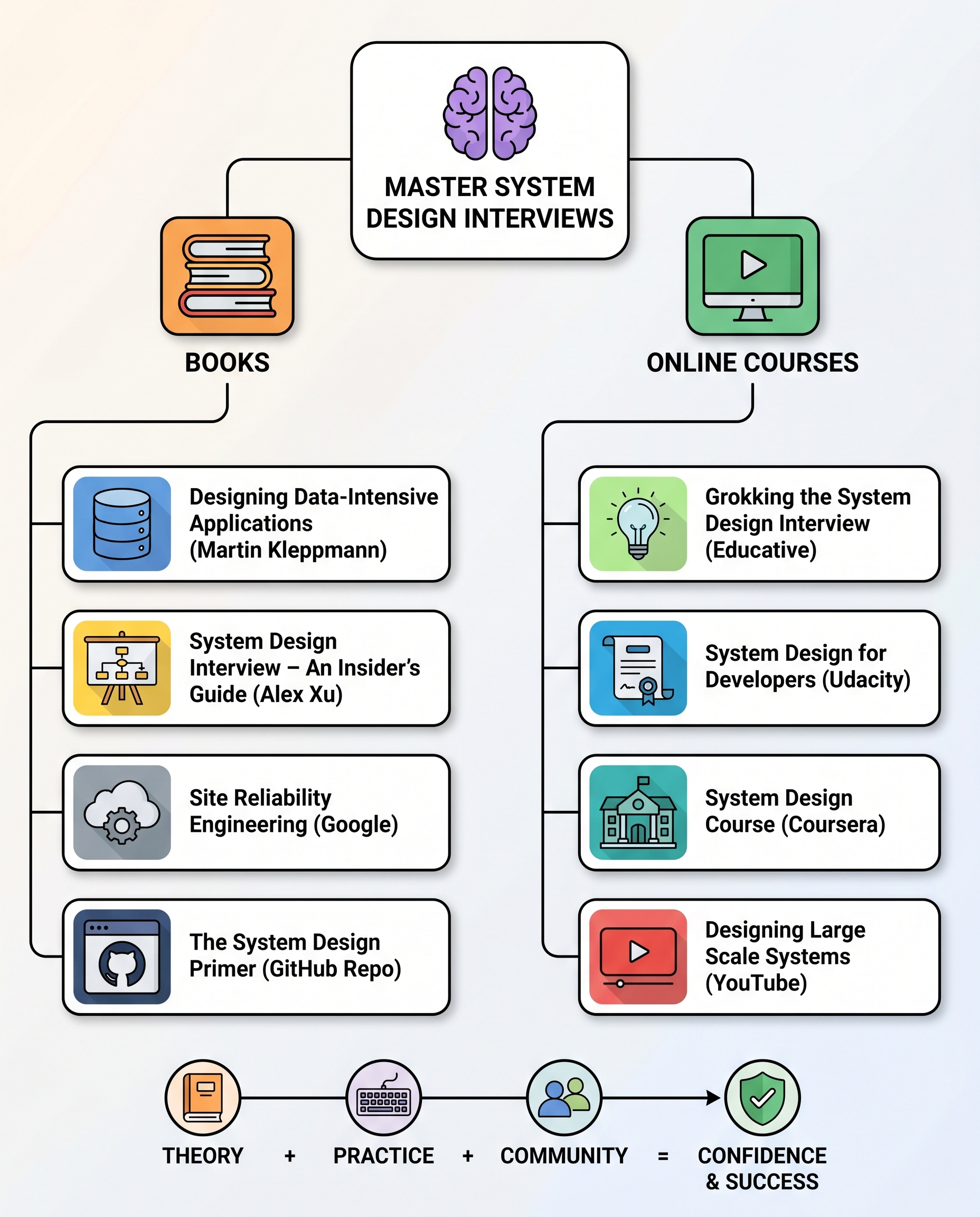
Suggested resources
- Hugging Face tutorials (transformers, embedding retrieval)
- Papers/notes on dual‑tower models and dense retrieval
- Reinforcement learning primers (PPO) and RLHF summaries
- NVIDIA Triton Inference Server docs and guides on multi‑GPU inference
- System design practice for concurrency and distributed systems
Final notes
This report captures practical signals: interviewers cared about fairness/product impact, productionization of code, and engineering depth for ML deployment. Passing the interview is a strong outcome; to get matched to ML‑heavy teams, deepen hands‑on knowledge of RL techniques and inference at scale.
#MachineLearning #InterviewPrep #MLOps
About the author
bugfree.ai is an advanced AI-powered platform designed to help software engineers master system design and behavioral interviews. Whether you’re preparing for your first interview or aiming to elevate your skills, bugfree.ai provides a robust toolkit tailored to your needs. Key Features:
150+ system design questions: Master challenges across all difficulty levels and problem types, including 30+ object-oriented design and 20+ machine learning design problems. Targeted practice: Sharpen your skills with focused exercises tailored to real-world interview scenarios. In-depth feedback: Get instant, detailed evaluations to refine your approach and level up your solutions. Expert guidance: Dive deep into walkthroughs of all system design solutions like design Twitter, TinyURL, and task schedulers. Learning materials: Access comprehensive guides, cheat sheets, and tutorials to deepen your understanding of system design concepts, from beginner to advanced. AI-powered mock interview: Practice in a realistic interview setting with AI-driven feedback to identify your strengths and areas for improvement.
bugfree.ai goes beyond traditional interview prep tools by combining a vast question library, detailed feedback, and interactive AI simulations. It’s the perfect platform to build confidence, hone your skills, and stand out in today’s competitive job market. Suitable for:
New graduates looking to crack their first system design interview. Experienced engineers seeking advanced practice and fine-tuning of skills. Career changers transitioning into technical roles with a need for structured learning and preparation.
Comments
Join the discussionNo comments yet. Be the first to comment.