
High-Score Interview Breakdown: Amazon CA L5 ML Engineer Onsite Loop (6 Rounds)
This is a concise, structured write-up of a high-scoring onsite loop for an Amazon Canada L5 Machine Learning Engineer role. The candidate came in with a PhD and a polished job talk, navigated six rounds (coding, system design, ML breadth/depth, hiring manager, and a Bar Raiser), and received an offer. Below are what was asked, how the candidate approached each round, and practical tips you can use to prepare.
Quick summary
- Loop: 6 rounds (Job Talk, Coding, Hiring Manager, ML Breadth, Bar Raiser, ML Depth)
- Strengths called out by interviewers: clear research-to-product storytelling, end-to-end ML system knowledge, technical depth on transformers/VLMs, and ownership mindset
- Result: Offer
Round-by-round breakdown
1) Job Talk — presented PhD thesis + strong Q&A
What happened
- 20–30 minute presentation of the PhD thesis followed by deep Q&A.
- Questions covered experimental design, failure modes, ablations, baselines, and productionization.
Why it mattered
- This is where you show communication, ownership, and ability to translate research into product impact.
How to prepare
- Tell a crisp story: problem → approach → experiments → takeaway → impact.
- Keep slides focused (10–12 slides max for 20–30 minutes).
- Anticipate weaknesses: have slides or verbal answers ready for limitations, negative results, and next steps.
- Prepare one-liner impact metrics and how you would productionize or scale the approach.
Sample questions to rehearse
- Why this baseline? What did you learn from the ablation that changed your design?
- How would the method behave with noisy/incomplete labels?
- If deployed, what monitoring signals would you track?
2) Coding — algorithmic problem + optimization story
What happened
- One coding question focused on optimizing a naive approach. The candidate iterated from a hashmap-counts solution to a two-pointer approach and delivered a clear plan for correctness and edge cases.
Why it mattered
- Amazon expects solid algorithmic thinking and the ability to explain trade-offs, complexity, and delivery quality (tests, edge cases).
How to prepare
- Practice medium-to-hard LeetCode problems: two pointers, sliding window, hashing, sorting, and graph traversals.
- When optimizing, narrate each step: correctness → complexity → memory trade-offs → test plan.
- Use whiteboard/typed-coding practice to get comfortable communicating while coding.
Tips during the interview
- State your brute force first; get interviewer buy-in before optimizing.
- Explain complexity and edge cases out loud; write a couple of tests.
- If you refactor, summarize the improvement in big-O and when it applies.
3) Hiring Manager (HM) — ML system design for NLP/video + “Earn Trust” behavioral
What happened
- A system design conversation focused on building an ML system for NLP/video use cases and behavioral questions aimed at ownership and cross-team influence.
Why it mattered
- HM evaluates fit for role, ability to ship, prioritize, and work across teams.
How to prepare
- Be ready to design a high-level ML system: data ingestion, labeling, training pipelines, model serving, A/B testing, metrics, and rollout strategy.
- Prepare STAR stories emphasizing ownership, trade-offs, stakeholder management, and how you handled ambiguity.
Suggested structure for system design answers
- Goals & success metrics
- Data sources & labeling strategy
- Model architecture choices & training regimen
- Deployment & monitoring (latency, throughput, drift detection)
- Roadmap: quick wins vs longer-term investments
4) ML Breadth — Transformers, ViT, BERT/GPT-2, CLIP, Swin + curiosity
What happened
- Rapid-fire or scenario-based questions spanning modern architectures and how you’d apply them to problems.
Why it mattered
- Interviewers test whether you have a broad mental map of ML techniques and when to pick them.
How to prepare
- Know the core ideas and typical use-cases for: Transformers, Vision Transformers (ViT), BERT/GPT-2 families, CLIP, Swin Transformers, contrastive learning, and representation learning.
- Be ready to describe training data needs, compute trade-offs, and transfer learning strategies.
Sample prompts
- When would you choose ViT vs a CNN or Swin for a new vision task?
- How does CLIP enable zero-shot transfer and what are its limitations?
- How do you handle data imbalance and domain shift for pretraining/fine-tuning?
5) Bar Raiser — ownership, tight deadlines, incomplete data, think big
What happened
- Evaluated on Amazon leadership principles (notably Ownership, Dive Deep, and Think Big) and how you handle unclear requirements and tight timelines.
Why it mattered
- The Bar Raiser enforces the hiring bar: technical depth + leadership and long-term culture fit.
How to prepare
- Prepare crisp, high-impact stories showing ownership, shipping under constraints, and decisions made with incomplete info.
- Emphasize measurable outcomes and learning from failure.
Key traits to demonstrate
- Bias for action, principled trade-offs, long-term thinking, and ability to lift others.
6) ML Depth — end-to-end LLM/VLM pipeline from tokenization to edge deployment
What happened
- Deep technical dive into building and deploying a language or vision-language model pipeline: tokenization, pretraining vs fine-tuning, model compression, serving, and edge deployment.
Why it mattered
- Shows you can own models from research to production and reason about constraints across the stack.
How to prepare
- Be ready to discuss:
- Tokenization strategies and implications for OOV handling and subword vocab size
- Pretraining objectives vs supervised fine-tuning
- Techniques for model compression: distillation, pruning, quantization (INT8/INT4), and latency/accuracy trade-offs
- Serving architectures: batching, model parallelism, caching, request routing
- Monitoring: drift detection, data/label pipelines, and rollback strategies
- Privacy, safety, and data governance considerations for LLMs/VLMs
Example follow-ups you might get
- How would you reduce inference latency for a 2B-parameter VLM to fit an on-device 300ms SLO?
- How do you evaluate hallucination and mitigate it in a multimodal setting?
Cross-cutting tips from this loop
- Narrate trade-offs: For every choice, give one or two alternative approaches and why you picked the one you did.
- Connect research to product: Quantify impact and explain production concerns (observability, retraining cadence, cost).
- Tests & edge cases: For coding and system design, explicitly state how you'd validate correctness and handle failure modes.
- Behavioral prep: Have concise STAR stories focused on ownership, influencing without authority, and shipping under ambiguity.
- Practice mock interviews that combine coding with system-design or ML-depth dives back-to-back to simulate fatigue.
Recommended resources
- LeetCode (Medium/Hard sets): focus on two-pointers, sliding windows, and hashing
- Papers/notes: "Attention Is All You Need", ViT, CLIP, Swin Transformer papers
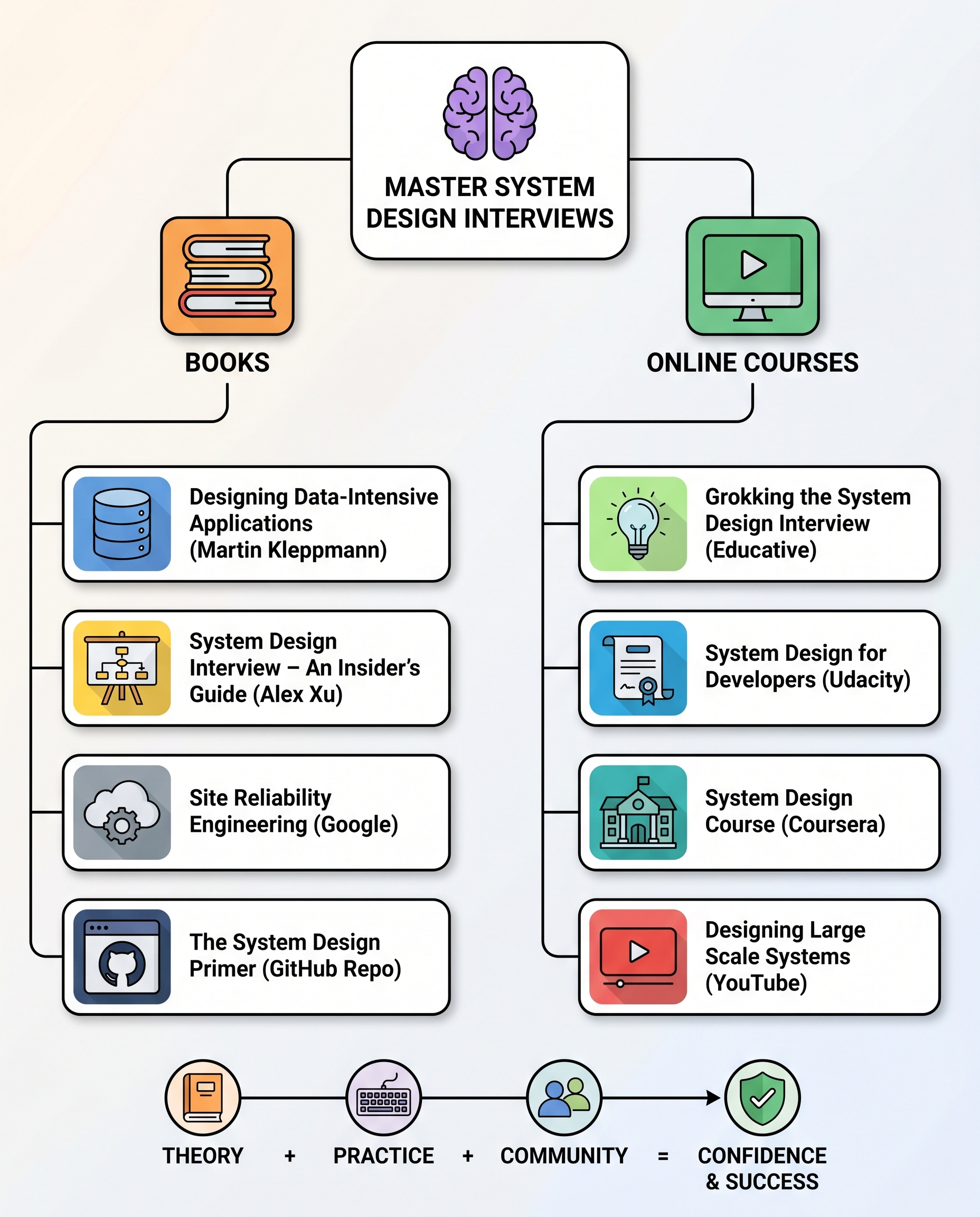
- System design: "Designing Data-Intensive Applications" (for infra patterns) and blog posts on production ML systems
- Deployment/compression: Hugging Face docs on quantization & distillation, TensorRT/ONNX guides
Final thoughts and result
This candidate demonstrated strong research communication (job talk), crisp algorithmic thinking (coding), pragmatic ML system design (HM + ML Depth), broad knowledge of modern architectures (ML Breadth), and Amazon leadership behaviors (Bar Raiser). The cohesive story across rounds — research → product thinking → shipping — helped secure an offer.
If you're preparing for a similar role, focus on bridging depth with product sense and practice communicating trade-offs clearly under time pressure.
Good luck — and if you want, share your current prep plan and I can suggest a tailored practice schedule.
#MachineLearning #InterviewPrep #NLP
About the author
bugfree.ai is an advanced AI-powered platform designed to help software engineers master system design and behavioral interviews. Whether you’re preparing for your first interview or aiming to elevate your skills, bugfree.ai provides a robust toolkit tailored to your needs. Key Features:
150+ system design questions: Master challenges across all difficulty levels and problem types, including 30+ object-oriented design and 20+ machine learning design problems. Targeted practice: Sharpen your skills with focused exercises tailored to real-world interview scenarios. In-depth feedback: Get instant, detailed evaluations to refine your approach and level up your solutions. Expert guidance: Dive deep into walkthroughs of all system design solutions like design Twitter, TinyURL, and task schedulers. Learning materials: Access comprehensive guides, cheat sheets, and tutorials to deepen your understanding of system design concepts, from beginner to advanced. AI-powered mock interview: Practice in a realistic interview setting with AI-driven feedback to identify your strengths and areas for improvement.
bugfree.ai goes beyond traditional interview prep tools by combining a vast question library, detailed feedback, and interactive AI simulations. It’s the perfect platform to build confidence, hone your skills, and stand out in today’s competitive job market. Suitable for:
New graduates looking to crack their first system design interview. Experienced engineers seeking advanced practice and fine-tuning of skills. Career changers transitioning into technical roles with a need for structured learning and preparation.
Comments
Join the discussionNo comments yet. Be the first to comment.