
Stop Treating OOD and HLD as Separate Interview Skills
In design interviews you aren't graded on HLD (high-level design) or OOD (object-oriented design) in isolation — you're graded on how well the two fit together. Recruiters want to see that you can go from requirements to architecture, and from architecture down to class structure, while keeping performance, scalability, and maintainability in mind.
Here's a simple, repeatable approach to unify HLD and OOD in interviews:
Clarify requirements
Ask intent-driven questions: functional requirements, non-functional constraints (latency, throughput), scale, consistency and fault-tolerance needs, data retention, and expected future changes.
Prioritize: which requirements are must-haves vs nice-to-haves.
Sketch the HLD
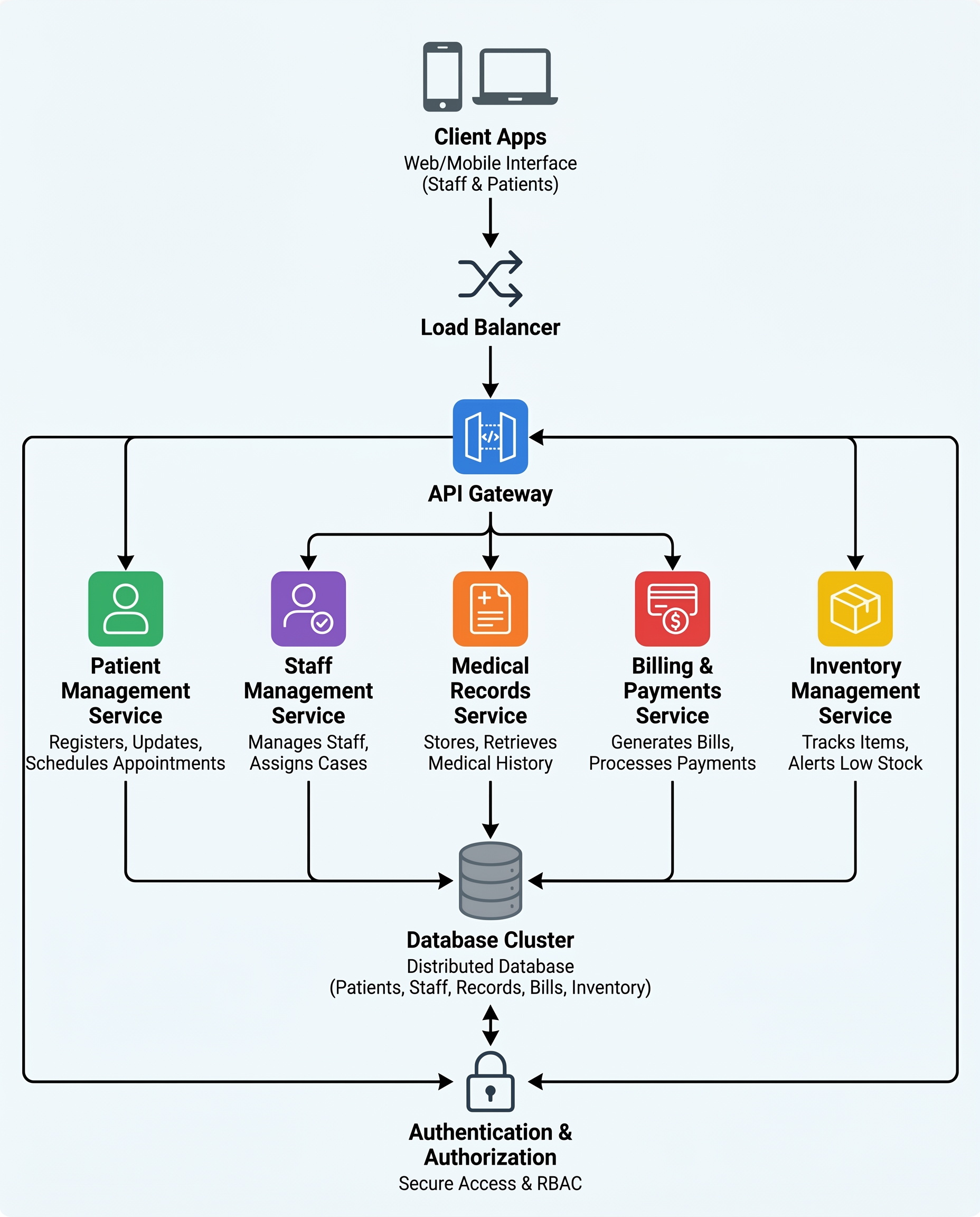
Draw components and their responsibilities (API layer, services, storage, caches, message buses).
- Show data flow and common paths (reads, writes, failure handling).
Highlight scaling points and bottlenecks (where to shard, where to cache, how to replicate).
Drill into OOD
Identify core domain objects and services that map to your architecture (e.g., User, Session, AuthService, StorageManager).
- Define responsibilities: what each class/service owns and what it delegates.
- Use OOP tools intentionally: encapsulation to hide state, interfaces to decouple modules, inheritance only when it models a real "is-a" relationship, and polymorphism to swap implementations.
Design clean interfaces to keep coupling low and cohesion high.
Connect OOD choices to HLD goals
For maintainability: prefer small, single-responsibility classes and clear interfaces so components can be replaced or tested independently.
- For performance: move hot paths into efficient data structures or specialized components (e.g., in-memory caches, batch processors), and design interfaces that minimize synchronization or blocking.
For scalability: design stateless services or partitioned state; make sure objects and services are shardable/replicable.
Iterate and explain trade-offs
When the interviewer challenges a decision, iterate. Show alternate designs and explain cost/benefit: complexity vs latency, eventual consistency vs strong consistency, monolith vs microservices, etc.
- Always tie back each OOD decision to an HLD objective: "I made X class stateless so instances can be horizontally scaled to meet the throughput requirement." or "I introduced an interface here to allow a faster in-memory implementation later without changing callers."
Quick example (conceptual): designing a file-storage service
- HLD: Client -> API gateway -> Upload service -> Chunking service -> Metadata DB + Chunk store (S3-like). Cache for frequent lookups.
- OOD mapping: classes/services like UploadHandler, Chunker, ChunkStoreClient, MetadataRepository. UploadHandler is thin and stateless (easy to scale). Chunker encapsulates chunking logic; ChunkStoreClient interface lets you swap implementations (local vs S3) without changing UploadHandler.
Interview checklist
- Start with clarifying questions.
- Draw HLD and label scaling points.
- Map components to classes and interfaces.
- Explain how OOD supports HLD goals (maintainability, performance, scalability).
- Discuss trade-offs and fallback options.
Treat HLD and OOD as one continuous design exercise. Show that you can translate high-level constraints into concrete, testable, and extensible code structure — and you’ll communicate the kind of engineering judgement interviewers are evaluating.
#SystemDesign #ObjectOrientedProgramming #SoftwareEngineering
About the author
bugfree.ai is an advanced AI-powered platform designed to help software engineers master system design and behavioral interviews. Whether you’re preparing for your first interview or aiming to elevate your skills, bugfree.ai provides a robust toolkit tailored to your needs. Key Features:
150+ system design questions: Master challenges across all difficulty levels and problem types, including 30+ object-oriented design and 20+ machine learning design problems. Targeted practice: Sharpen your skills with focused exercises tailored to real-world interview scenarios. In-depth feedback: Get instant, detailed evaluations to refine your approach and level up your solutions. Expert guidance: Dive deep into walkthroughs of all system design solutions like design Twitter, TinyURL, and task schedulers. Learning materials: Access comprehensive guides, cheat sheets, and tutorials to deepen your understanding of system design concepts, from beginner to advanced. AI-powered mock interview: Practice in a realistic interview setting with AI-driven feedback to identify your strengths and areas for improvement.
bugfree.ai goes beyond traditional interview prep tools by combining a vast question library, detailed feedback, and interactive AI simulations. It’s the perfect platform to build confidence, hone your skills, and stand out in today’s competitive job market. Suitable for:
New graduates looking to crack their first system design interview. Experienced engineers seeking advanced practice and fine-tuning of skills. Career changers transitioning into technical roles with a need for structured learning and preparation.
Comments
Join the discussionNo comments yet. Be the first to comment.