The single security move that pays off for payment systems
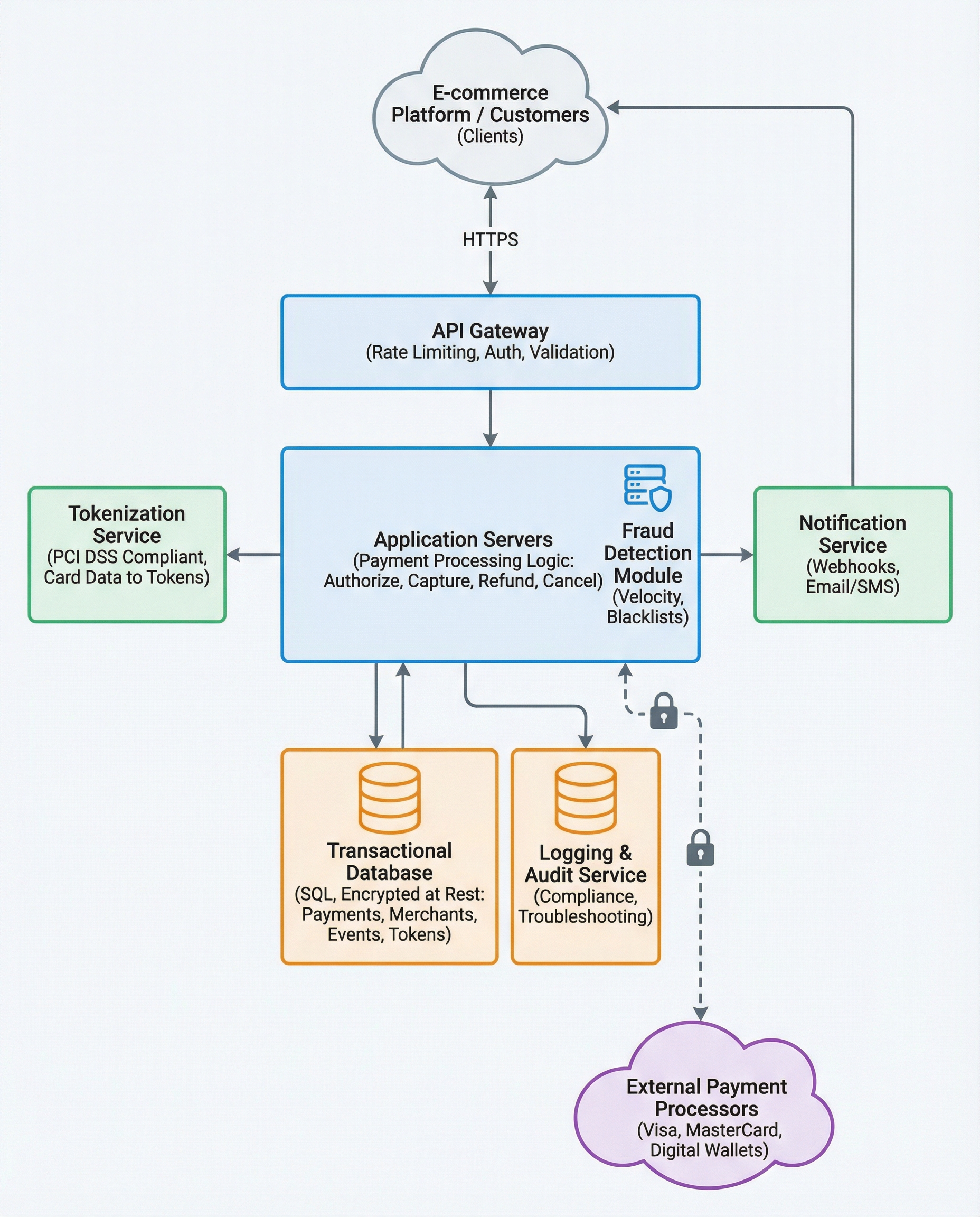
When designing a secure payment gateway, the smartest and simplest security move is: never store raw card data. Use a tokenization service so your core database holds only tokens (references), not PAN/CVV. That one architecture choice dramatically reduces the blast radius in a breach and narrows your PCI DSS scope.
Here’s how to explain it in an interview and how to implement it in production.
Core idea (short)
- Card data should flow directly to a PCI-compliant token vault or provider over TLS.
- Your system persists only the token (encrypted) plus transaction metadata — never the PAN/CVV.
- Combine this with least-privilege access controls and comprehensive audit logs for every token read/write.
Why this matters
- Reduces breach impact: stolen tokens are useless without the vault mapping or decryption keys.
- Narrows PCI DSS scope: fewer systems handle cardholder data, which simplifies compliance and lowers audit surface.
- Easier incident response: fewer places to investigate and remediate.
Implementation patterns
- Direct-to-vault (recommended)
- Client (browser or mobile) posts card data directly to the token provider via TLS (direct-post or iframe). Your servers never touch raw card data.
- Server-side tokenization
- Card data reaches your server over TLS and your server forwards it to a PCI-compliant vault. Use only when direct-post is impossible and minimize the scope tightly.
- Proxyless SDKs
- Token provider SDKs that submit card data from the client and return tokens without routing raw PAN through your backend.
Token types & behavior to mention
- Surrogate (random) tokens: no cryptographic relation to PAN — safest for reducing scope.
- Deterministic tokens: same PAN → same token (useful for lookup but increases risk if mapping leaks).
- Format-preserving tokens: maintain format for legacy systems — convenience trade-offs.
- Reversible vs irreversible: most vaults map token↔PAN; keep mapping in a hardened vault (HSM-backed) and restrict access.
Security controls you should call out
- TLS for all card data in transit (end-to-end). Avoid terminating TLS in untrusted components.
- Strong key management: HSMs, separation of duties, regular key rotation.
- Encryption at rest for tokens/metadata (even though tokens are less sensitive, defense-in-depth matters).
- RBAC and least privilege: only specific services/users can request real PANs from the vault.
- Multi-factor authentication and just-in-time elevation for token retrieval.
- Immutable audit logs: record every token read/write with timestamps, actors, and purpose.
- Monitoring & alerts: anomalous access patterns, bulk token exports, or unexpected token lookups.
What to say in an interview (concise sample)
Use this short, explicit answer when asked about PCI and payment design:
Card data should never be persisted in our core DB. We send PAN/CVV directly to a PCI-compliant token vault (via TLS/direct-post). The vault returns a token we store (encrypted) along with transaction metadata. Access to the vault is tightly controlled, audited, and keys live in an HSM. This minimizes PCI scope and the blast radius if we are breached.
That phrasing shows you know both the practical flow and the compliance/security reasoning.
Quick checklist to mention
- Direct-to-vault or provider SDKs used where possible
- TLS end-to-end for card data
- Tokens only persisted in core DB; PAN/CVV never stored
- HSM-backed key management and rotation
- RBAC, MFA, and least privilege for token access
- Immutable audit logs and anomaly detection
- Use a PCI-compliant provider and document scope reduction
Final note
Tokenization is a straightforward architecture decision but often overlooked by candidates who focus only on encryption or PCI paperwork. Being explicit—that card data must go directly to a PCI vault and your systems only keep tokens—demonstrates practical security-minded system design and immediately improves both security posture and compliance effort.
#CyberSecurity #SystemDesign #FinTech
About the author
bugfree.ai is an advanced AI-powered platform designed to help software engineers master system design and behavioral interviews. Whether you’re preparing for your first interview or aiming to elevate your skills, bugfree.ai provides a robust toolkit tailored to your needs. Key Features:
150+ system design questions: Master challenges across all difficulty levels and problem types, including 30+ object-oriented design and 20+ machine learning design problems. Targeted practice: Sharpen your skills with focused exercises tailored to real-world interview scenarios. In-depth feedback: Get instant, detailed evaluations to refine your approach and level up your solutions. Expert guidance: Dive deep into walkthroughs of all system design solutions like design Twitter, TinyURL, and task schedulers. Learning materials: Access comprehensive guides, cheat sheets, and tutorials to deepen your understanding of system design concepts, from beginner to advanced. AI-powered mock interview: Practice in a realistic interview setting with AI-driven feedback to identify your strengths and areas for improvement.
bugfree.ai goes beyond traditional interview prep tools by combining a vast question library, detailed feedback, and interactive AI simulations. It’s the perfect platform to build confidence, hone your skills, and stand out in today’s competitive job market. Suitable for:
New graduates looking to crack their first system design interview. Experienced engineers seeking advanced practice and fine-tuning of skills. Career changers transitioning into technical roles with a need for structured learning and preparation.
Comments
Join the discussionNo comments yet. Be the first to comment.