System Design Interviews: The 7-Step Framework You Must Follow
System design interviews are less about memorizing architectures and more about demonstrating clear thinking, trade-off analysis, and the ability to communicate a scalable solution. Use this practical 7-step framework to structure your answers and show interviewers you can design real systems.
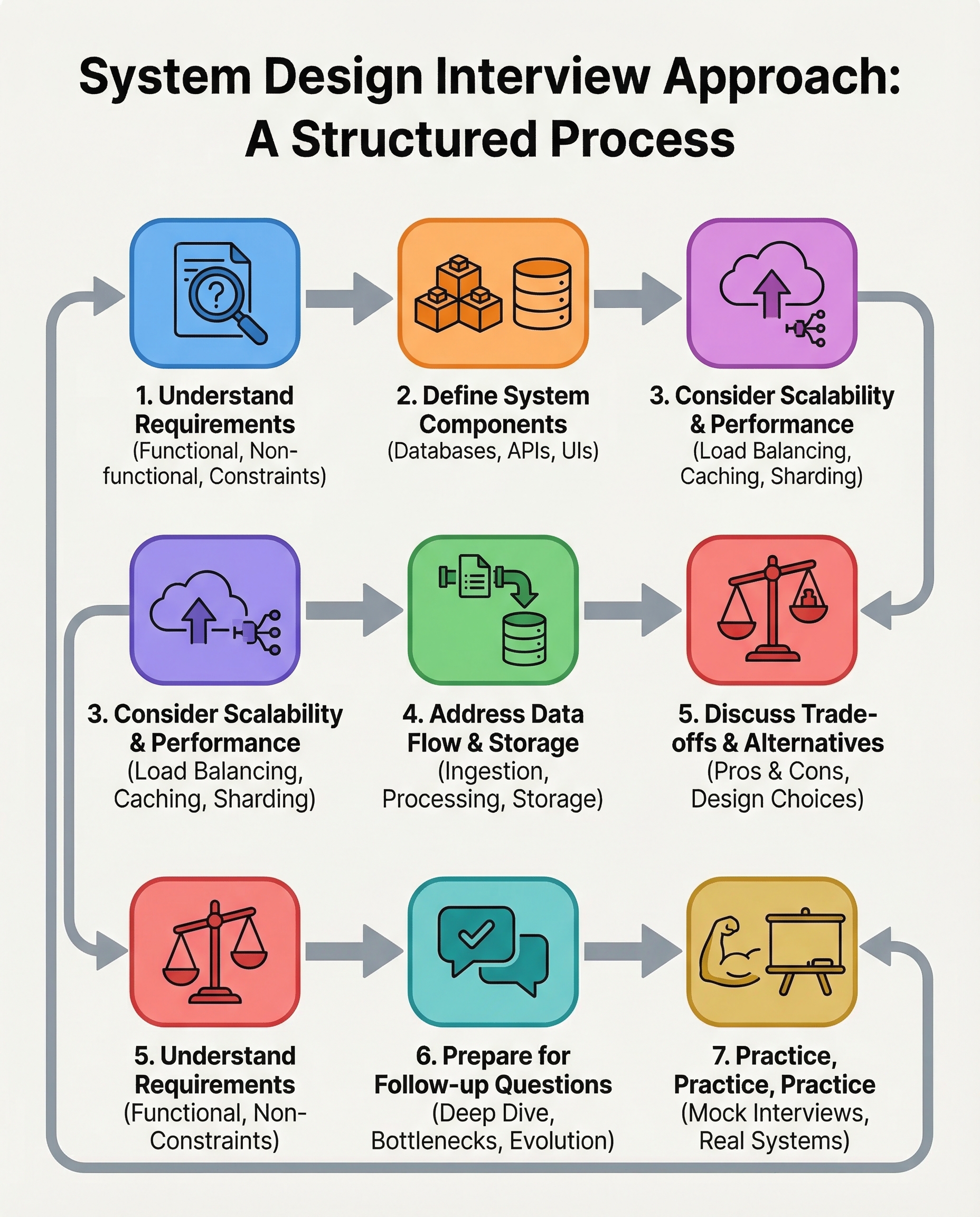
The 7-step framework
1) Clarify requirements
- Ask about functional and non-functional requirements (e.g., features, latency, throughput, consistency).
- Confirm constraints and scope: expected traffic, latency SLOs, cost limits, time for the prototype.
- Example questions to ask: "Do we need strong consistency? Should the system be global? What's the target RPS?"
2) Break the system into components
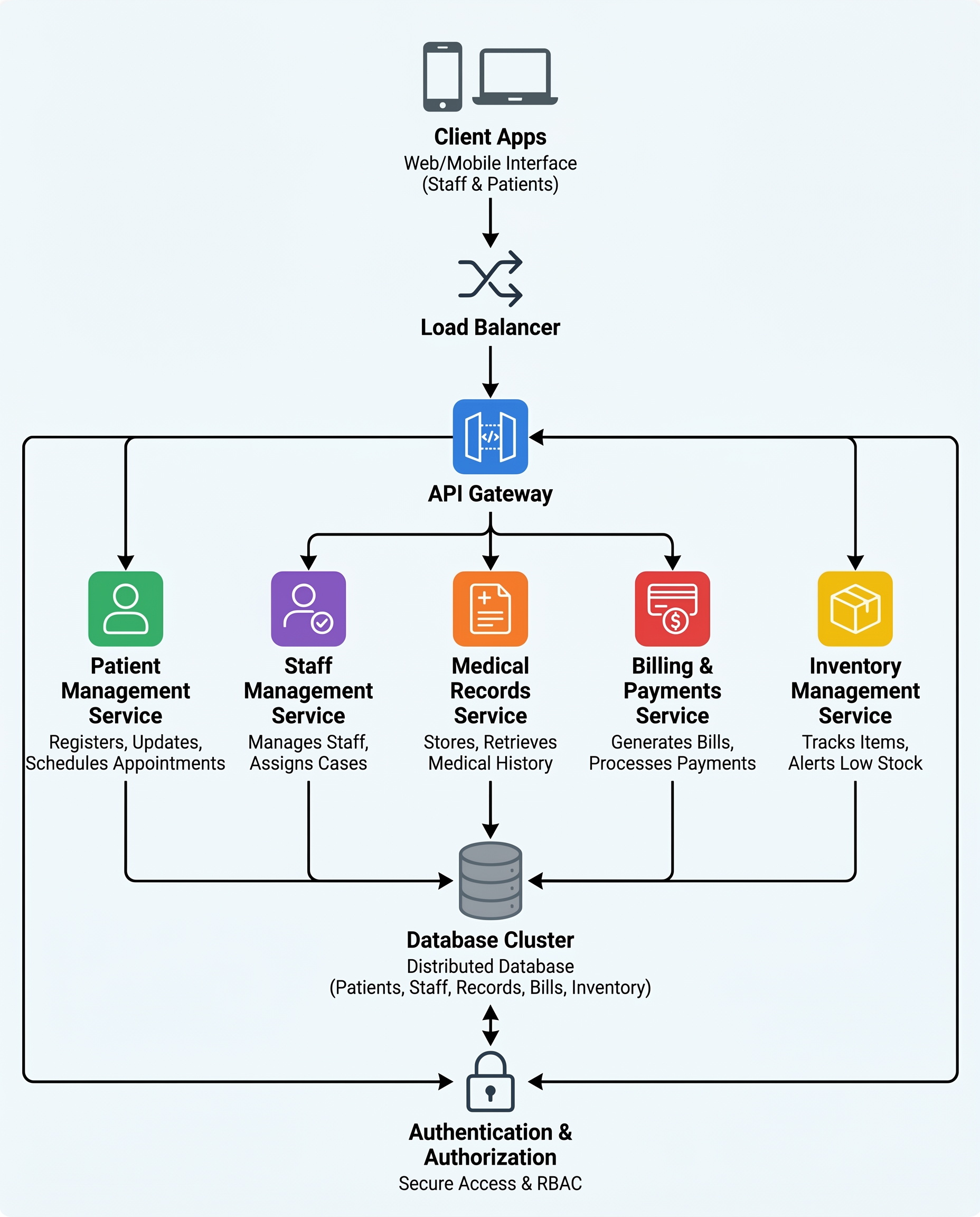
- Decompose the problem into logical components: clients/UI, API gateway, services, databases, message queues, caching, and external integrations.
- Draw a high-level block diagram and name responsibilities for each component.
- Keep components decoupled and explain communication patterns (sync vs async).
3) Design for scale
- Address load distribution (load balancers), fault isolation (replication, multiple AZs), and capacity planning.
- Add caching (CDN, in-memory caches), data partitioning (sharding), and stateless service design where possible.
- Mention autoscaling and how to scale database reads vs writes (replicas, read caches, CQRS patterns).
4) Map the data flow
- Show step-by-step flow: ingest → validate → process → persist → serve.
- Note where data is transformed, where it’s stored, and how it’s read back.
- Identify potential bottlenecks along the path and mitigation strategies (queueing, batching, backpressure).
5) State trade-offs and alternatives
- Be explicit about your choices: why pick SQL vs NoSQL, synchronous vs asynchronous processing, or strong vs eventual consistency.
- Present alternative designs and when they’d be preferable (e.g., event sourcing for auditability vs simpler CRUD for lower complexity).
- Discuss cost, operational complexity, and developer velocity as part of trade-offs.
6) Expect follow-ups and probing questions
- Interviewers will dig into hotspots: single points of failure, failure recovery, scaling limits, consistency models, and evolving features.
- Prepare to iterate: add rate limiting, circuit breakers, retries with exponential backoff, and monitoring/observability.
7) Practice with real systems and mocks
- Rehearse designs for common systems: URL shortener, feed systems, chat service, file storage, and notification services.
- Do mock interviews, time-boxed whiteboard sessions, and review real architecture docs (e.g., how large companies design systems).
- Practice explaining trade-offs concisely and drawing clear diagrams under time pressure.
Quick checklist for interview time
- Clarify scope and constraints (2–3 minutes)
- Draw a high-level architecture and components (3–5 minutes)
- Deep-dive into the most important components (5–10 minutes)
- Discuss scaling, trade-offs, and failure scenarios (5 minutes)
- Summarize and propose next steps or improvements (1–2 minutes)
System design interviews reward clear thinking and structured communication. Use this 7-step framework to guide your response, be explicit about assumptions, and practice until you can explain a coherent, scalable design in 20–30 minutes.
Good luck—design thoughtfully and communicate clearly.
#SystemDesign #SoftwareEngineering #InterviewPrep
About the author
bugfree.ai is an advanced AI-powered platform designed to help software engineers master system design and behavioral interviews. Whether you’re preparing for your first interview or aiming to elevate your skills, bugfree.ai provides a robust toolkit tailored to your needs. Key Features:
150+ system design questions: Master challenges across all difficulty levels and problem types, including 30+ object-oriented design and 20+ machine learning design problems. Targeted practice: Sharpen your skills with focused exercises tailored to real-world interview scenarios. In-depth feedback: Get instant, detailed evaluations to refine your approach and level up your solutions. Expert guidance: Dive deep into walkthroughs of all system design solutions like design Twitter, TinyURL, and task schedulers. Learning materials: Access comprehensive guides, cheat sheets, and tutorials to deepen your understanding of system design concepts, from beginner to advanced. AI-powered mock interview: Practice in a realistic interview setting with AI-driven feedback to identify your strengths and areas for improvement.
bugfree.ai goes beyond traditional interview prep tools by combining a vast question library, detailed feedback, and interactive AI simulations. It’s the perfect platform to build confidence, hone your skills, and stand out in today’s competitive job market. Suitable for:
New graduates looking to crack their first system design interview. Experienced engineers seeking advanced practice and fine-tuning of skills. Career changers transitioning into technical roles with a need for structured learning and preparation.
Comments
Join the discussionNo comments yet. Be the first to comment.