{style="max-width:100%;height:auto;"}
Serverless Interviews: The One Reliability Detail Candidates Miss—Dead Letter Queues (DLQ)
In serverless systems, "retries" are not a reliability plan—they're a risk. When functions (Lambda or other FaaS) process events, some failures are permanent: malformed payloads, schema drift, or missing external dependencies. If you rely on blind retries you risk creating poison messages, incurring rising costs, and building up a processing backlog.
A Dead Letter Queue (DLQ) is the safety valve for those permanent failures: after a configured number of unsuccessful attempts, the event is moved to a separate queue or topic for inspection and replay.
Below is how to explain DLQs clearly in interviews, and best practices to actually make them useful.
How to explain DLQs in an interview (short, crisp)
- Set a sensible max-retries and exponential backoff — stop retrying forever.
- Route repeated failures to a DLQ (separate queue/topic) for inspection.
- Alert on DLQ depth and provide tooling to inspect, fix, and replay failed events.
Why retries alone are dangerous
- Poison messages: an event that always fails will keep being reprocessed, wasting compute and pushing other messages back.
- Rising costs: repeated invocations or processing retries increase bills.
- Backlog and latency: retries can increase queue depth and add unpredictable delays.
What a good DLQ strategy looks like
- Configure max retries and backoff: e.g., limit attempts (commonly 3) with exponential backoff so transient issues have time to recover.
- Move failed events to a DLQ after the limit is reached, preserving the original payload and metadata (timestamps, error messages, attempt counts).
- Monitor DLQ depth and rate: alert when DLQ items appear or when depth grows.
- Provide a replay tool: a safe way to inspect, repair, and re-inject events into the pipeline with proper tracing.
Practical recommendations
- Preserve context: store the original event, error details, and attempt history in the DLQ so you can diagnose quickly.
- Make replays idempotent: ensure handlers can process replays without causing duplicate side effects.
- Automate alert thresholds: e.g., alert on any new DLQ item for critical pipelines, or on a growth rate for high-volume systems.
- Add tagging/labels: categorize failures (schema, validation, downstream) to route to the right owner.
Platform notes (AWS-focused)
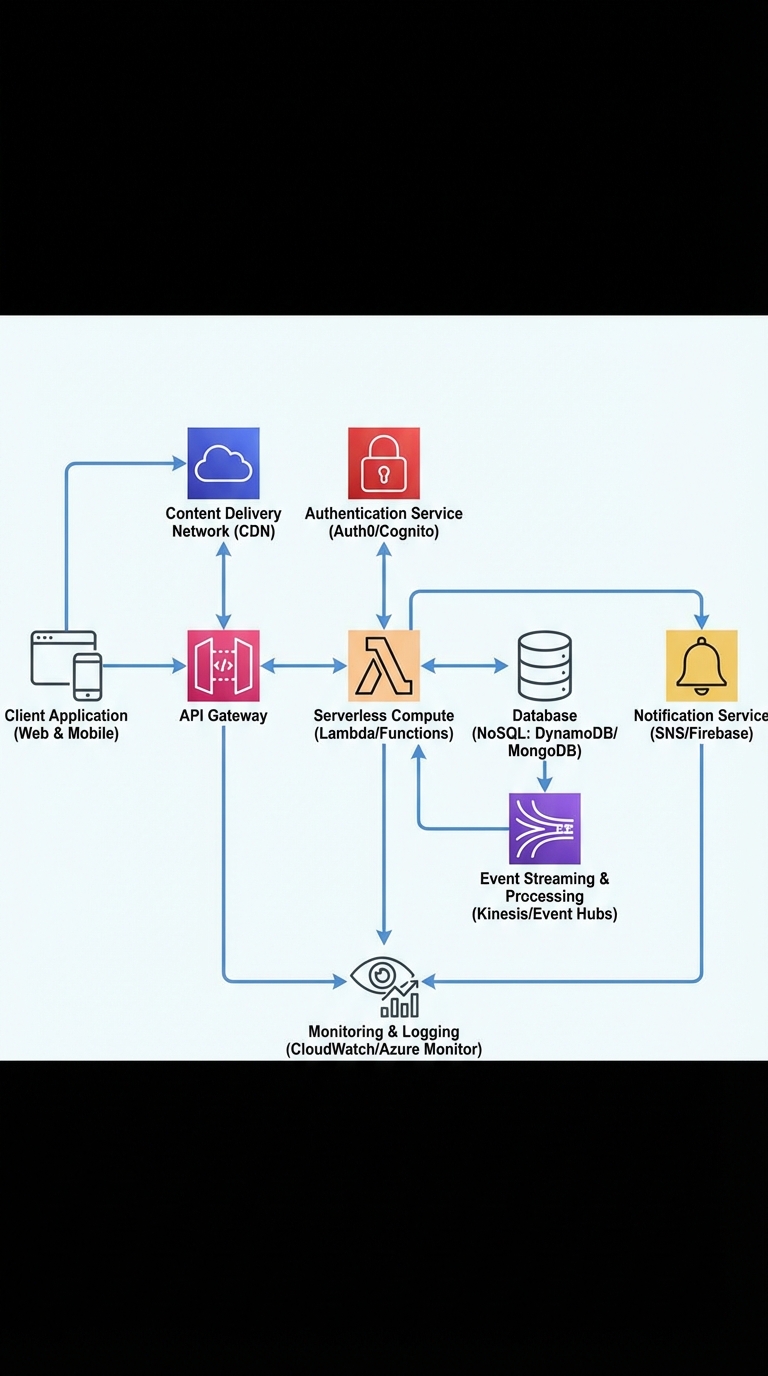
- AWS Lambda (async) historically supports dead-letter queues (SQS/SNS) and also offers "Destinations" to send OnFailure events to SQS, SNS, or EventBridge. Either approach can be used to capture failed async invocations.
- For event-driven systems using SQS or SNS directly, attach an SQS DLQ or a separate SNS topic to gather failed messages.
(Exact configuration varies by platform — the interview answer should show you know the pattern and the trade-offs, not necessarily every CLI flag.)
Designing a replay tool (must-have features)
- Preview: show payload, error, and attempt history before replaying.
- Edit/patch: allow safe fixes (e.g., fix schema issues, add missing fields) before re-injection.
- Controlled replay: replay a single message or a batch, with rate limits.
- Audit trail: log who replayed what and when.
- Safety checks: prevent replaying messages that will cause harmful side effects unless explicitly confirmed.
Common interview pitfalls to avoid
- Saying "we just retry until it succeeds" — that signals you don't handle permanent failures.
- Not mentioning monitoring/alerts for DLQs — moving messages to a DLQ without visibility is useless.
- Forgetting to preserve original metadata — without it, debugging and replaying is painful.
One-liner to close with in an interview
"Retries are a mitigation for transient errors; DLQs are the plan for permanent ones—configure retries and backoff, route to a DLQ, alert on depth, and provide a safe replay path."
Tags: #Serverless #CloudComputing #AWS
About the author
bugfree.ai is an advanced AI-powered platform designed to help software engineers master system design and behavioral interviews. Whether you’re preparing for your first interview or aiming to elevate your skills, bugfree.ai provides a robust toolkit tailored to your needs. Key Features:
150+ system design questions: Master challenges across all difficulty levels and problem types, including 30+ object-oriented design and 20+ machine learning design problems. Targeted practice: Sharpen your skills with focused exercises tailored to real-world interview scenarios. In-depth feedback: Get instant, detailed evaluations to refine your approach and level up your solutions. Expert guidance: Dive deep into walkthroughs of all system design solutions like design Twitter, TinyURL, and task schedulers. Learning materials: Access comprehensive guides, cheat sheets, and tutorials to deepen your understanding of system design concepts, from beginner to advanced. AI-powered mock interview: Practice in a realistic interview setting with AI-driven feedback to identify your strengths and areas for improvement.
bugfree.ai goes beyond traditional interview prep tools by combining a vast question library, detailed feedback, and interactive AI simulations. It’s the perfect platform to build confidence, hone your skills, and stand out in today’s competitive job market. Suitable for:
New graduates looking to crack their first system design interview. Experienced engineers seeking advanced practice and fine-tuning of skills. Career changers transitioning into technical roles with a need for structured learning and preparation.
Comments
Join the discussionNo comments yet. Be the first to comment.