High-Score Microsoft SDE II Interview Experience (Bugfree Users)
A concise, practical breakdown of a successful Microsoft SDE II interview loop from Bugfree users. This walkthrough covers the online assessment, each final round, system-design thinking, the coding problems asked, and concrete takeaways that helped convert the loop into an offer with the security team.
Quick summary
- OA: 3 coding problems (2 medium, 1 hard).
- Final loop: 4 rounds.
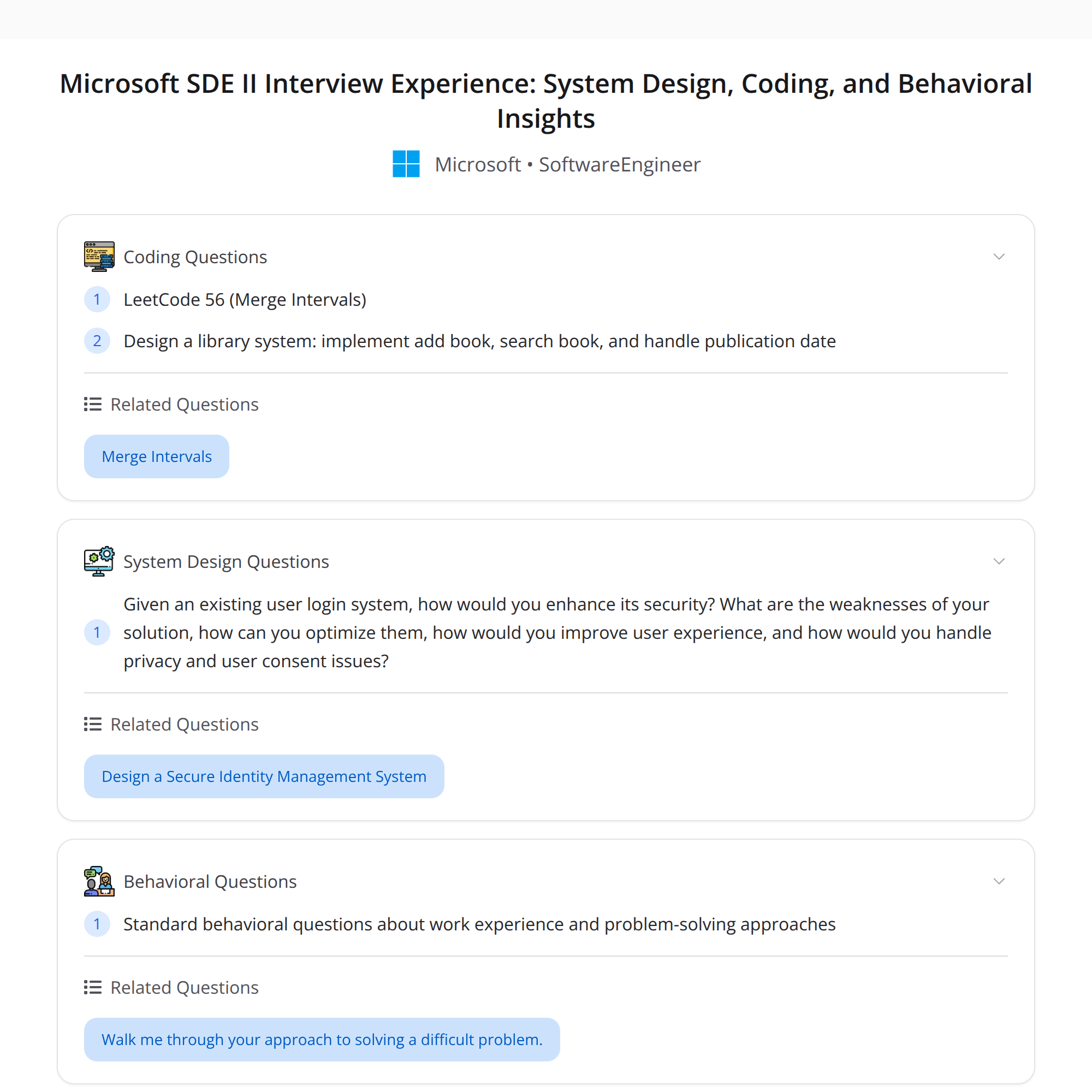
- Rounds 1–2: Behavioral + coding / object-oriented design (designed a library system: add/search books, publication dates).
- Round 3: Algorithms + behavioral (LeetCode 56 — Merge Intervals).
- Round 4: System design deep dive — harden an existing login system: threat analysis, optimizations, UX trade-offs, privacy & consent, and defending your choices.
- Outcome: advanced to an offer with the security team.
Online Assessment (OA)
The OA contained three coding problems: two medium-level and one hard. Typical expectations:
- Read each problem carefully and clarify constraints before coding.
- Aim for clean, correct solutions first; optimize if time permits.
- Use tests and edge cases (empty inputs, duplicates, boundaries).
Pro tip: For a mixed OA, prioritize solving the medium problems reliably and allocate remaining time to the hard problem — partial credit for a well-reasoned approach helps.
Final loop breakdown
Rounds 1–2: Behavioral + Coding / OOD
These rounds mixed behavioral questions (STAR format) with a design/coding task. The OOD prompt was: build a library system supporting adding/searching books and handling publication dates.
Key points to cover when designing the library system:
Requirements & Clarifications
- Functional: add/delete books, search by title/author/ISBN/date, filter by publication ranges.
- Non-functional: latency targets, throughput, storage size, consistency (strong vs eventual).
- Edge cases: duplicate ISBNs, different editions, partial matches, international dates/timezones.
Data model (example)
- Book { id, title, authors[], isbn, publication_date, edition, metadata }
- Indexes on title, author, isbn, and publication_date for efficient queries.
APIs
- POST /books — add book
- GET /books?title=&author=&from_date=&to_date=
- PUT /books/{id} — update metadata
Search & storage choices
- Use an inverted index or search engine (Elasticsearch) for full-text title/author search.
- Relational or NoSQL (RDS / DynamoDB) for consistent lookups by ISBN or ID.
Consistency & scaling
- Strong consistency for write/read of the same ISBN; eventual consistency for global search indexing.
- Sharding by ISBN range or hash, and replication for availability.
Complexity & trade-offs
- Real-time indexing vs batch updates (freshness vs throughput).
- Data normalization (editions/works separation) vs simplicity.
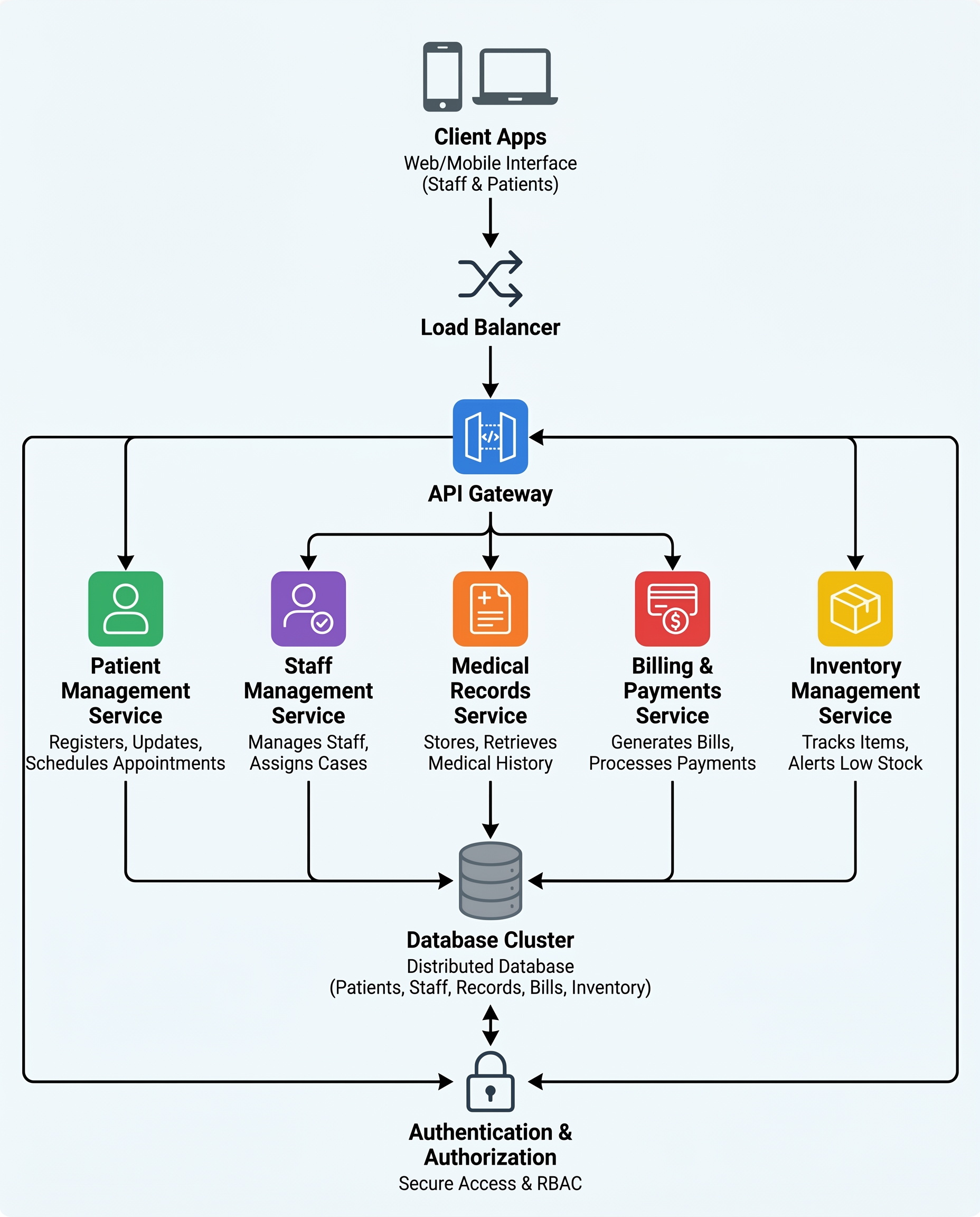
During the interview, explain trade-offs, draw a simple architecture diagram, and discuss how to handle growth.
Round 3: Algorithms + Behavioral (LC 56 — Merge Intervals)
Problem summary: Given a list of intervals, merge all overlapping intervals.
Suggested approach to present in interview:
- Clarify interval representation and edge cases (closed/open, single interval, unsorted).
- Algorithm:
- Sort intervals by start time: O(n log n).
- Iterate through sorted list, merging when current.start <= last.end; otherwise append a new interval.
- Complexity: time O(n log n) due to sort, space O(n) for result (or O(1) with in-place merging if allowed).
- Walk through an example and test edge cases.
This is a classic question to demonstrate clear reasoning, coding accuracy, and test coverage.
Round 4: System Design Deep Dive — Harden a Login System
This was the most involved round and the one that likely led to alignment with the security team. The prompt: take an existing login system and harden it — discuss threats, mitigations, optimizations, UX trade-offs, privacy & consent, and be prepared to defend your design decisions.
Suggested structure when answering:
Clarify scope and assumptions
- Which components exist? (Auth service, user DB, session store)
- Target users, SLOs, and regulatory constraints (GDPR, CCPA).
Threat model (examples)
- Credential stuffing / brute force
- Phishing and stolen credentials
- Session hijacking and fixation
- CSRF / XSS
- Replay attacks
- Insider threats and data leakage
Mitigations & Hardenings
- Password policies + secure storage: salted hashing (bcrypt/argon2), password strength checks.
- Rate limiting and IP/device throttling; progressive delays and account lockouts.
- Multi-factor authentication (MFA) and adaptive authentication based on risk signals (new device, geolocation, velocity).
- Device recognition and risk scoring; step-up authentication when risk is high.
- Secure session management: HttpOnly, Secure cookies, short-lived tokens with refresh tokens, token revocation lists.
- Protect against CSRF/XSS: same-site cookies, CSRF tokens, input validation, Content Security Policy (CSP).
- Implement logging, monitoring, and anomaly detection (sudden spikes, failed attempts, new IPs).
- Use CAPTCHA tactically for bot mitigation.
Performance & Optimization
- Cache non-sensitive user metadata for login hints (but never cache secrets).
- Use CDNs and edge authentication where appropriate for latency.
- Separate auth service for isolation and horizontal scaling.
UX trade-offs
- Friction vs security: avoid unnecessary friction for low-risk flows (remember device) while enforcing strict controls for high-risk actions.
- Progressive enrollment of MFA (offer but don’t force initially) vs mandatory MFA for privileged roles.
- Clear recovery flows: account recovery should be secure but not overly painful.
Privacy, Consent & Compliance
- Data minimization: store only what’s necessary (hashed passwords, limited PII).
- Consent for collecting device signals and analytics; provide opt-out where required.
- Retention policies for logs and access to audit trails.
Defend your decisions
- Use metrics: false positive/negative rates, time-to-auth, recovery time, MTTR for incidents.
- Explain cost vs benefit: MFA adoption cost vs reduction in account takeover.
- Show you can pivot: if fraud spikes, how you’d tighten controls with minimal user impact.
In the interview, the candidate who advanced presented clear threat models, prioritized mitigations, explained trade-offs, and used metrics to justify choices. That strong security-first design thinking aligned well with the security team.
Key takeaways & tips
- Clarify requirements and ask scope-setting questions before jumping into code/design.
- For OOD, present data models, APIs, scaling plan, and trade-offs.
- In algorithm rounds, state complexity, walk through examples, and test edge cases.
- For security-related system design: lead with threat modeling, pick mitigations by risk, and be ready to explain UX and privacy trade-offs.
- Practice classic interview problems (e.g., Merge Intervals) and common design patterns for authentication & authorization.
- Behavioral rounds: use the STAR method and highlight impact, metrics, and lessons learned.
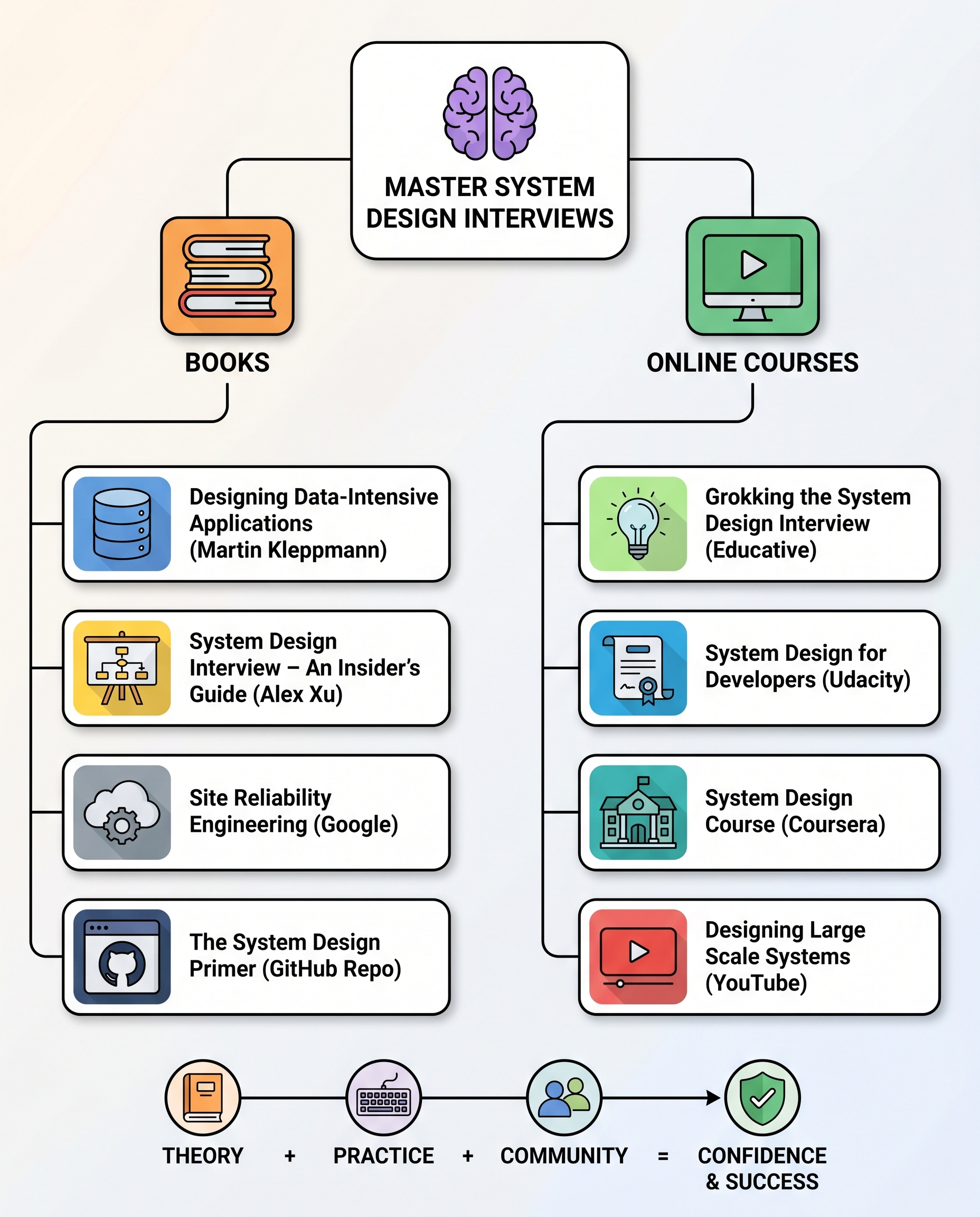
Resources to practice
- LeetCode problems (merge intervals, sorting + sweep-line patterns)
- System design guides (auth patterns, OWASP for threat modeling)
- Mock interviews focusing on defending trade-offs and metrics
Closing
This loop combined strong coding fundamentals, clear OOD thinking, and deep security-aware system design. The candidate progressed to an offer with the security team by demonstrating both engineering rigor and threat-aware decision making.
Good luck with your interviews — focus on clarity, trade-offs, and measurable outcomes.
About the author
bugfree.ai is an advanced AI-powered platform designed to help software engineers master system design and behavioral interviews. Whether you’re preparing for your first interview or aiming to elevate your skills, bugfree.ai provides a robust toolkit tailored to your needs. Key Features:
150+ system design questions: Master challenges across all difficulty levels and problem types, including 30+ object-oriented design and 20+ machine learning design problems. Targeted practice: Sharpen your skills with focused exercises tailored to real-world interview scenarios. In-depth feedback: Get instant, detailed evaluations to refine your approach and level up your solutions. Expert guidance: Dive deep into walkthroughs of all system design solutions like design Twitter, TinyURL, and task schedulers. Learning materials: Access comprehensive guides, cheat sheets, and tutorials to deepen your understanding of system design concepts, from beginner to advanced. AI-powered mock interview: Practice in a realistic interview setting with AI-driven feedback to identify your strengths and areas for improvement.
bugfree.ai goes beyond traditional interview prep tools by combining a vast question library, detailed feedback, and interactive AI simulations. It’s the perfect platform to build confidence, hone your skills, and stand out in today’s competitive job market. Suitable for:
New graduates looking to crack their first system design interview. Experienced engineers seeking advanced practice and fine-tuning of skills. Career changers transitioning into technical roles with a need for structured learning and preparation.
Comments
Join the discussionNo comments yet. Be the first to comment.