High-Score Meta Data Engineer Interview (Bugfree Users): SQL, Python & Behavioral Wins
bugfree.ai is an advanced AI-powered platform designed to help software engineers master system design and behavioral interviews. Whether you’re preparing for your first interview or aiming to elevate your skills, bugfree.ai provides a robust toolkit tailored to your needs. Key Features:
150+ system design questions: Master challenges across all difficulty levels and problem types, including 30+ object-oriented design and 20+ machine learning design problems. Targeted practice: Sharpen your skills with focused exercises tailored to real-world interview scenarios. In-depth feedback: Get instant, detailed evaluations to refine your approach and level up your solutions. Expert guidance: Dive deep into walkthroughs of all system design solutions like design Twitter, TinyURL, and task schedulers. Learning materials: Access comprehensive guides, cheat sheets, and tutorials to deepen your understanding of system design concepts, from beginner to advanced. AI-powered mock interview: Practice in a realistic interview setting with AI-driven feedback to identify your strengths and areas for improvement.
bugfree.ai goes beyond traditional interview prep tools by combining a vast question library, detailed feedback, and interactive AI simulations. It’s the perfect platform to build confidence, hone your skills, and stand out in today’s competitive job market. Suitable for:
New graduates looking to crack their first system design interview. Experienced engineers seeking advanced practice and fine-tuning of skills. Career changers transitioning into technical roles with a need for structured learning and preparation.

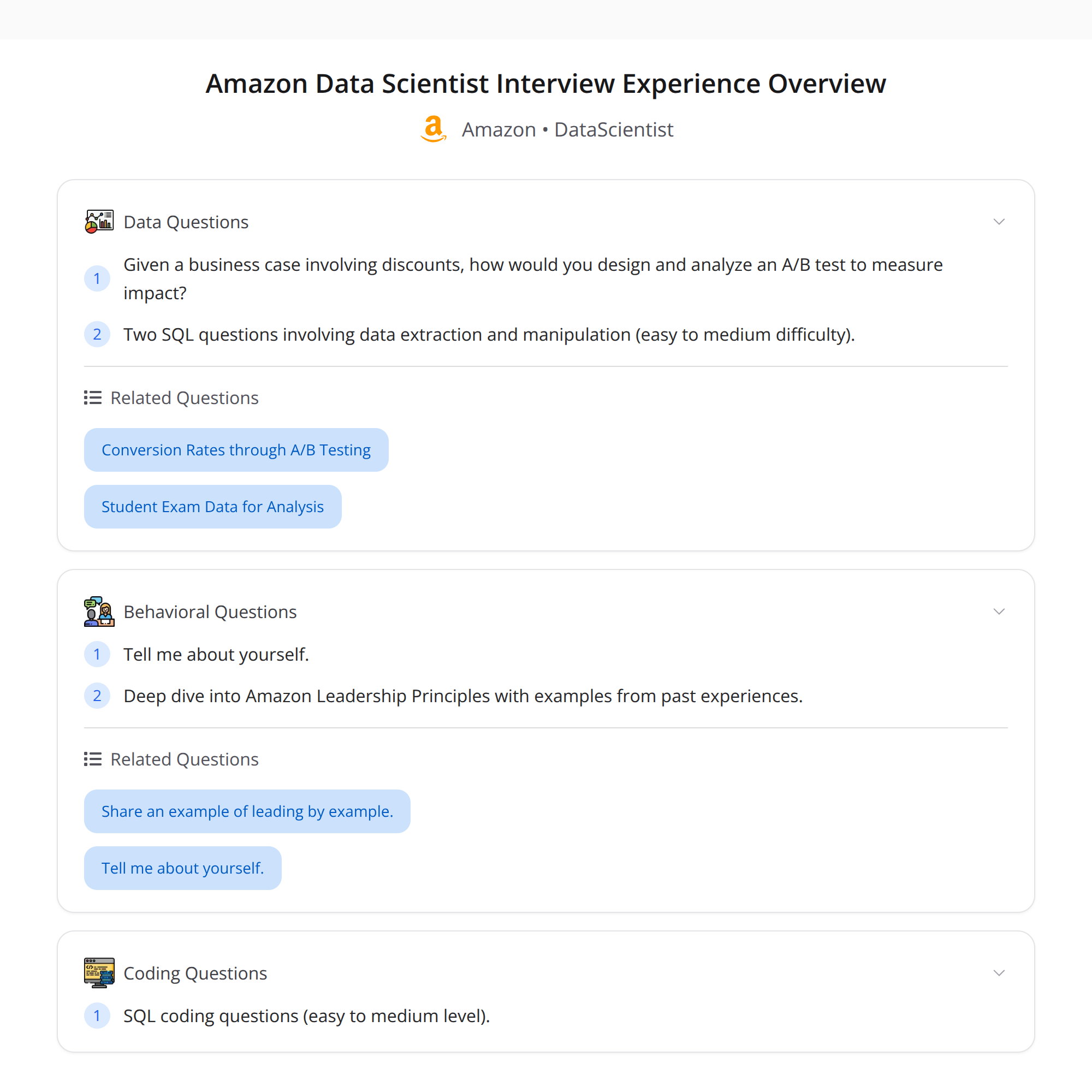
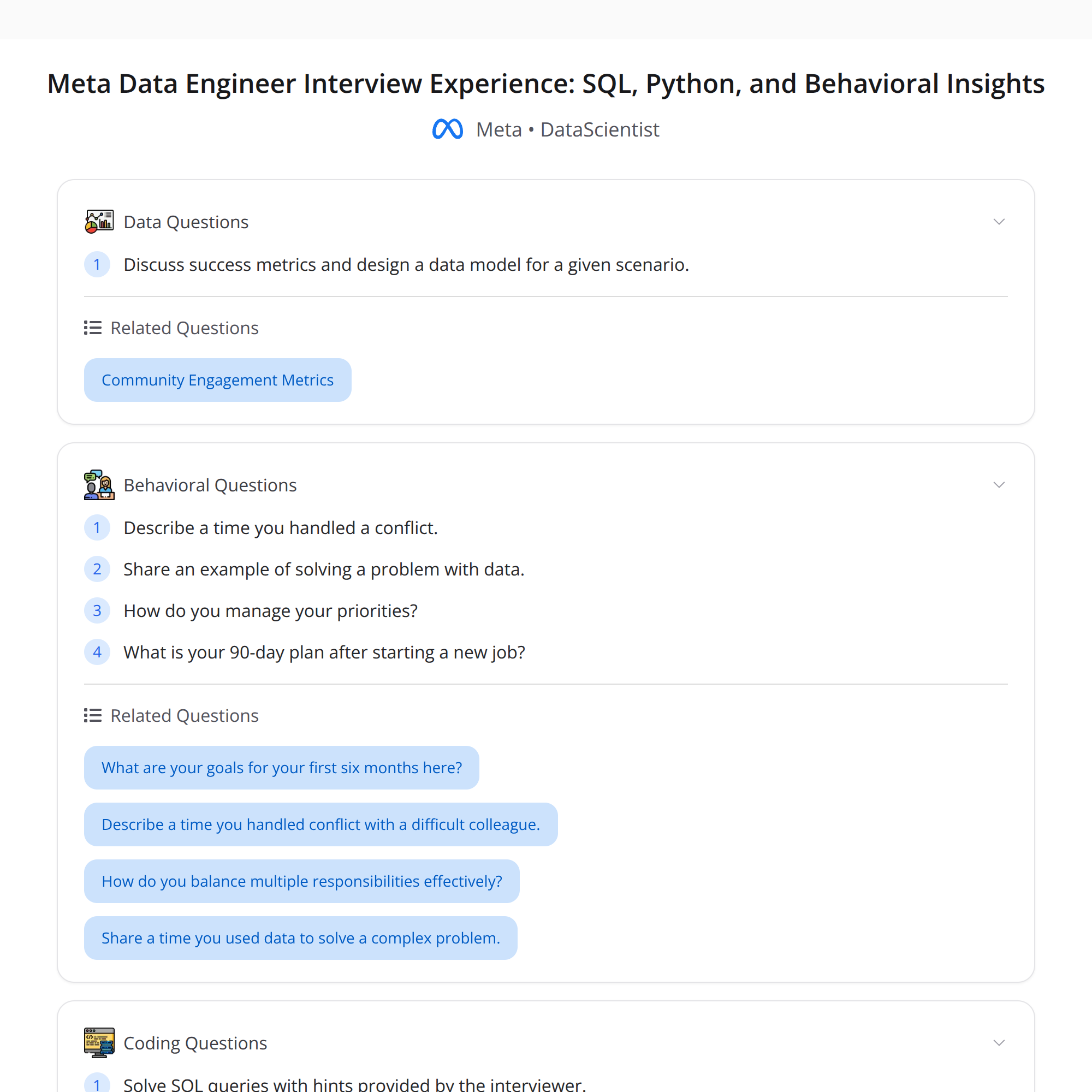
Shared by Bugfree users: a concise, high-yield walkthrough of a Meta Data Engineer loop — 3 technical rounds + 1 behavioral.
Quick summary
I just wrapped a high-score Meta Data Engineer loop (shared by Bugfree users). The loop was three technical rounds followed by a behavioral interview. The pattern is consistent: SQL and Python dominate, modeling is checked briefly, and the behavioral round tests structured thinking and prioritization.
Expect roughly two questions per section.
Round-by-round breakdown
Round 1 — "Netflix-style"
- Fast-paced manager interview. Interviewer keeps the tempo high and expects quick clarifications.
- SQL hints provided; use them but don't rely on them blindly.
- Python portion split into two parts. If anything in the problem wording is ambiguous, ask clarifying questions immediately to avoid wasted work.
What they look for: clear thought process, concise SQL, and correct Python logic under time pressure.
Round 2 — "Uber-style"
- Focus on metrics and light data modeling.
- You may get quiet thinking time before writing — use it to outline your approach and the metric definitions.
- Execution tends to be straightforward; clarity and correct assumptions matter more than cleverness.
What they look for: correct metric definitions, awareness of edge cases, and an understanding of how data modeling supports the metric.
Round 3 — "Reels" (Senior Data Engineer)
- Very detail-oriented. This interviewer expects fully correct SQL and Python, and will catch small mistakes.
- Precision matters: naming, null handling, types, and performance considerations can come up.
What they look for: correctness, careful validation of edge cases, and clean, efficient code.
Behavioral Round
- Topics: conflict resolution, prioritization, data-driven problem solving, and a 90-day plan for the role.
- Structure answers (STAR) and be specific with metrics and outcomes.
- For a 90-day plan, include learning goals, quick wins, and measurable deliverables.
What they look for: leadership, pragmatic prioritization, and ability to tie decisions to business impact.
Practical preparation checklist
- SQL
- Master joins, GROUP BY, window functions, CTEs, and NULL handling.
- Practice writing readable queries and explaining them step-by-step.
- Prepare to correct or optimize a query under scrutiny.
- Python
- Be comfortable with pandas for data manipulation; know when to use vectorized ops vs loops.
- Handle parsing, date/time operations, and memory-aware solutions.
- Write clear, testable functions and think about edge cases.
- Data modeling & metrics
- Know star schema basics, fact vs dimension, and naming conventions.
- Be able to define metrics (denominator, numerator, filters) and explain trade-offs.
- Behavioral
- Prepare 4–6 STAR examples (conflict, prioritization, data-driven insight, cross-team collaboration).
- Draft a concise 90-day plan: 30-day learning, 60-day small projects, 90-day measurable impact.
Example question seeds (expect ~2 per section)
- SQL
- Calculate a retention metric over rolling windows with edge-case users who reappear after long gaps.
- Optimize a slow query and explain trade-offs for pre-aggregation vs on-demand computation.
- Python
- Given an event log, compute session-level metrics (sessionization) in pandas and handle missing timestamps.
- Implement a deduplication function that chooses the canonical record based on priority rules.
- Metrics/Modeling
- Define monthly active users for a product with multi-platform behavior.
- Sketch a minimal data model to support A/B metric calculations.
- Behavioral
- Describe a time you disagreed with a stakeholder — how you resolved it, and what changed.
- Present a 90-day plan for joining a data engineering squad that supports analytics and experimentation.
Interview strategy & tips
- Clarify assumptions up front (time windows, dedup rules, null semantics).
- When stuck, outline the approach in plain language before writing code — interviewers reward the roadmap.
- For SQL: name your intermediate steps (CTE names), and call out complexity or index needs if relevant.
- For Python: keep functions small, write the happy path first, then handle edge cases.
- Behavioral answers should be metric-oriented: quantify impact where possible.
Final takeaways
- SQL and Python are the heavy lifters — treat them as the core of your prep.
- Modeling questions are lighter but expect correctness in how metrics map to the model.
- Be precise in the senior round; small mistakes will be called out.
- Structure behavioral answers; have a crisp 90-day plan.
Good luck — focus on clarity, correctness, and measurable outcomes.
#DataEngineering #SQL #InterviewPrep