LinkedIn SDE-2 Infra Backend Interview — High-Score Experience & Key Takeaways
Bugfree users recently shared a high-scoring interview experience for the LinkedIn SDE-2 Infra Backend role. The process covered multiple focused rounds — each designed to vet different skills: problem solving, core backend concepts, concurrency, and scalable system design. Below is a concise breakdown of what candidates faced, what mattered, and how to prepare.
Interview rounds — what to expect
Elimination / Core Concepts
Heavy focus on core backend fundamentals: Spring Boot internals, OS mechanisms, and system calls.
- Questions tested both conceptual understanding (how things work) and practical debugging/diagnosis skills.
Tip: Be ready to explain request handling in Spring, lifecycle hooks, dependency injection, and how OS primitives (processes, threads, file descriptors, syscalls) affect backend services.
DSA (Data Structures & Algorithms)
Timed coding rounds emphasizing quick thinking, clean code, and algorithmic efficiency.
- Common areas: arrays/strings, hashing, trees/graphs, two-pointers, sliding windows, and complexity analysis.
Tip: Focus on clarity, correct edge-case handling, and explaining your approach before coding.
Concurrency
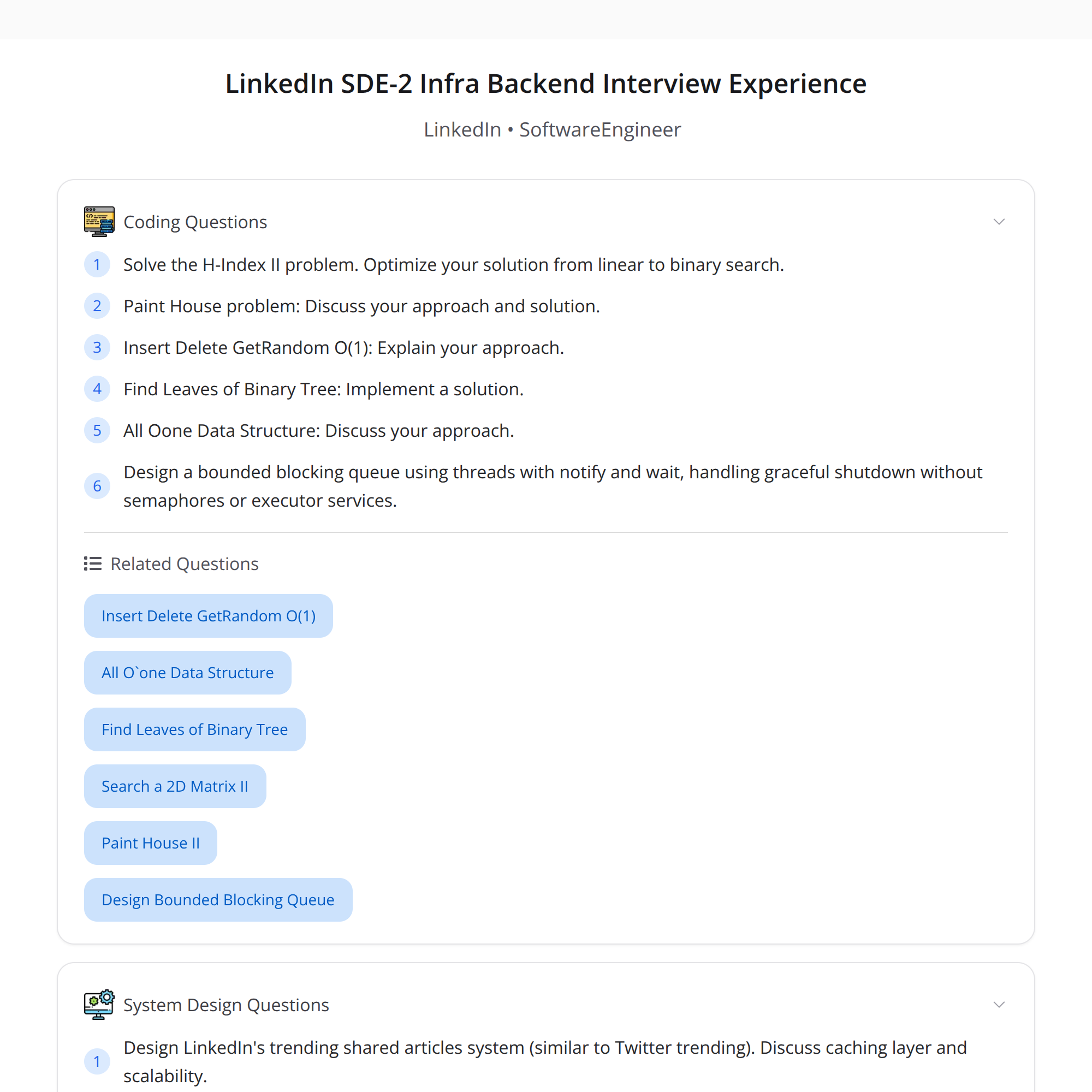
A practical concurrency/design task: implement a bounded blocking queue using threads.
- Interviewers look for thread-safety, liveness (no deadlocks), and correctness under concurrent producers/consumers.
Suggested approach for a bounded blocking queue (brief):
- Data structure: circular buffer (array) with head/tail indices and count.
- Synchronization options:
- Java: ReentrantLock + two Condition objects (notFull / notEmpty), or use synchronized + wait/notifyAll.
- Correctly handle spurious wakeups and ensure conditions are re-checked in loops.
Edge cases: multiple producers/consumers, interrupts, and shutdown behavior.
High-Level / System Design
Emphasis on scalable architecture rather than toy diagrams.
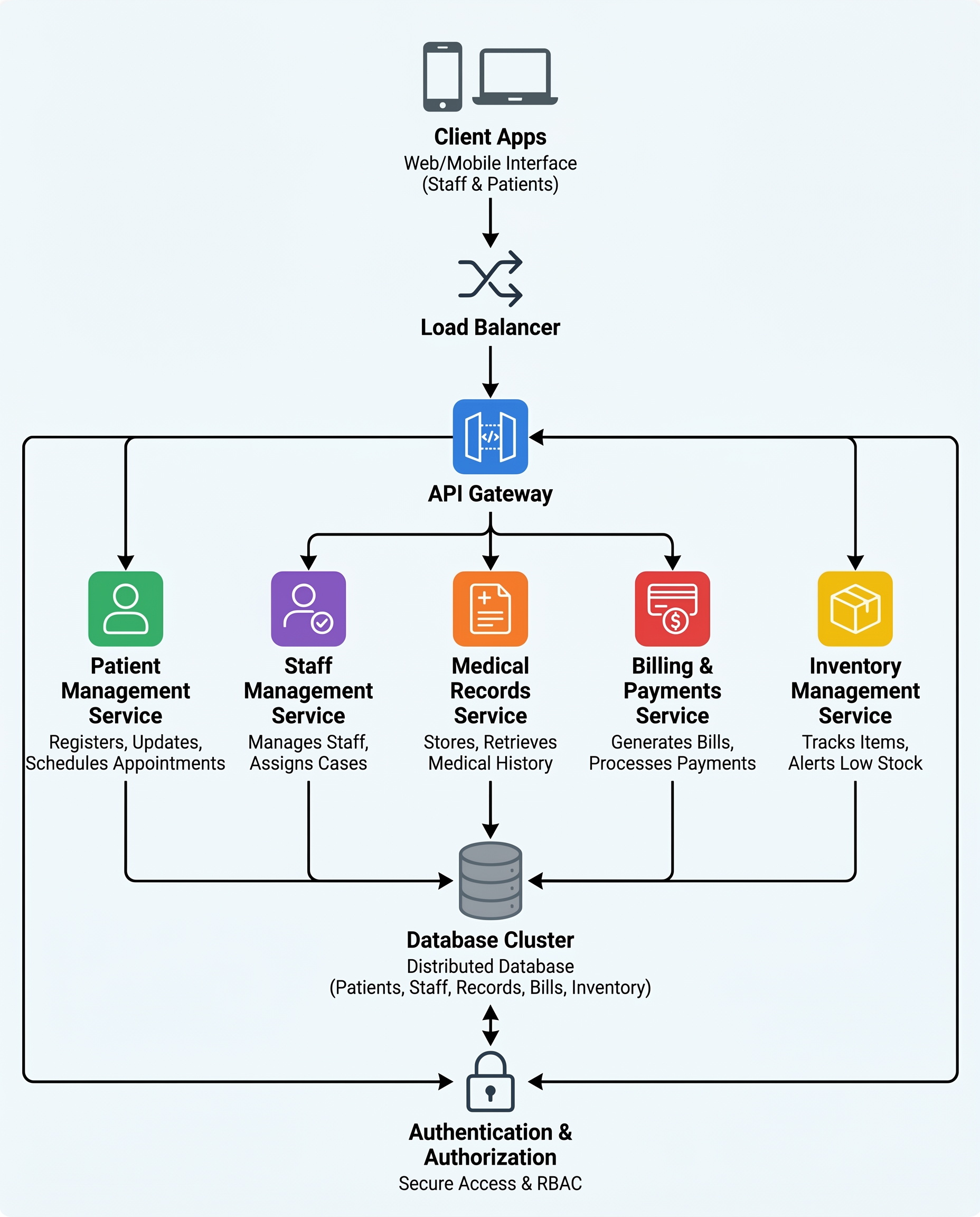
- Expect to design systems that address real-world constraints: high availability, data partitioning, consistency, caching, and monitoring.
Key topics to cover in design answers:
- Clarify requirements (functional and non-functional) up front.
- API design and data models.
- Storage choices and partitioning strategy (SQL vs NoSQL trade-offs).
- Caching strategies, cache invalidation, and consistency guarantees.
- Load balancing, service discovery, and autoscaling considerations.
- Asynchronous processing (message queues) for high throughput.
- Observability: metrics, logging, tracing, and alerting.
- Failure modes and recovery strategies.
Constructive feedback from interviewers
- Deepen system design fundamentals — explain trade-offs clearly and justify technology choices.
- Practice explaining designs at multiple levels (high-level overview, component interactions, and low-level details).
- In DSA/Concurrency rounds, communicate assumptions, complexity, and correctness while coding.
- Demonstrate real-world engineering judgment: operational concerns, scaling bottlenecks, and monitoring strategies.
Preparation checklist
- Brush up on Spring Boot internals: request lifecycle, autoconfiguration, and common performance pitfalls.
- Study OS basics and relevant system calls that affect networking and IO.
- Practice timed DSA problems (LeetCode / HackerRank) focusing on clarity and edge cases.
- Solve concurrency problems (producer-consumer, readers-writers, locks vs atomics) and implement correct thread coordination.
- Do mock system-design interviews; sketch end-to-end designs and iterate on trade-offs.
- Review distributed systems concepts: replication, sharding, consensus, and consistency models.
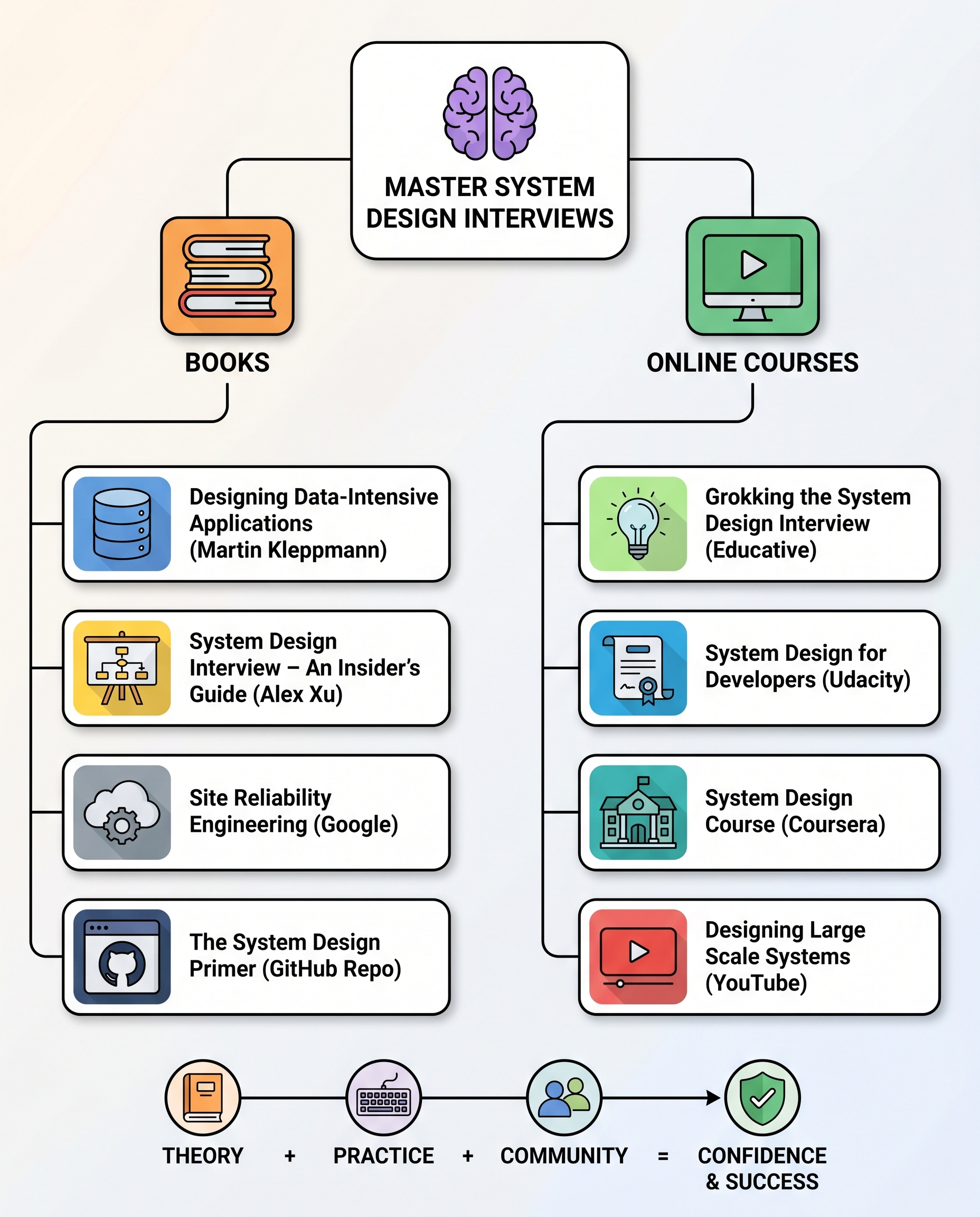
Recommended resources:
- Designing Data-Intensive Applications (Martin Kleppmann)
- The System Design Primer (GitHub)
- LeetCode for timed practice
- Official Spring Boot documentation and guides
Key takeaways
- Interviews were holistic: technical depth (OS & Spring), algorithmic speed, concurrency correctness, and scalable system thinking all mattered.
- Clear communication, well-reasoned trade-offs, and practical engineering instincts distinguish high-scoring candidates.
- Targeted practice (especially in concurrency and system design) yields the best returns.
Good luck preparing — focus on fundamentals, practice with purpose, and explain your trade-offs clearly.
#SoftwareEngineering #InterviewExperience #Backend #LinkedIn #Bugfree
About the author
bugfree.ai is an advanced AI-powered platform designed to help software engineers master system design and behavioral interviews. Whether you’re preparing for your first interview or aiming to elevate your skills, bugfree.ai provides a robust toolkit tailored to your needs. Key Features:
150+ system design questions: Master challenges across all difficulty levels and problem types, including 30+ object-oriented design and 20+ machine learning design problems. Targeted practice: Sharpen your skills with focused exercises tailored to real-world interview scenarios. In-depth feedback: Get instant, detailed evaluations to refine your approach and level up your solutions. Expert guidance: Dive deep into walkthroughs of all system design solutions like design Twitter, TinyURL, and task schedulers. Learning materials: Access comprehensive guides, cheat sheets, and tutorials to deepen your understanding of system design concepts, from beginner to advanced. AI-powered mock interview: Practice in a realistic interview setting with AI-driven feedback to identify your strengths and areas for improvement.
bugfree.ai goes beyond traditional interview prep tools by combining a vast question library, detailed feedback, and interactive AI simulations. It’s the perfect platform to build confidence, hone your skills, and stand out in today’s competitive job market. Suitable for:
New graduates looking to crack their first system design interview. Experienced engineers seeking advanced practice and fine-tuning of skills. Career changers transitioning into technical roles with a need for structured learning and preparation.
Comments
Join the discussionNo comments yet. Be the first to comment.