The Interview Detail Most Candidates Miss: Coupon Expiry Is a Data Problem
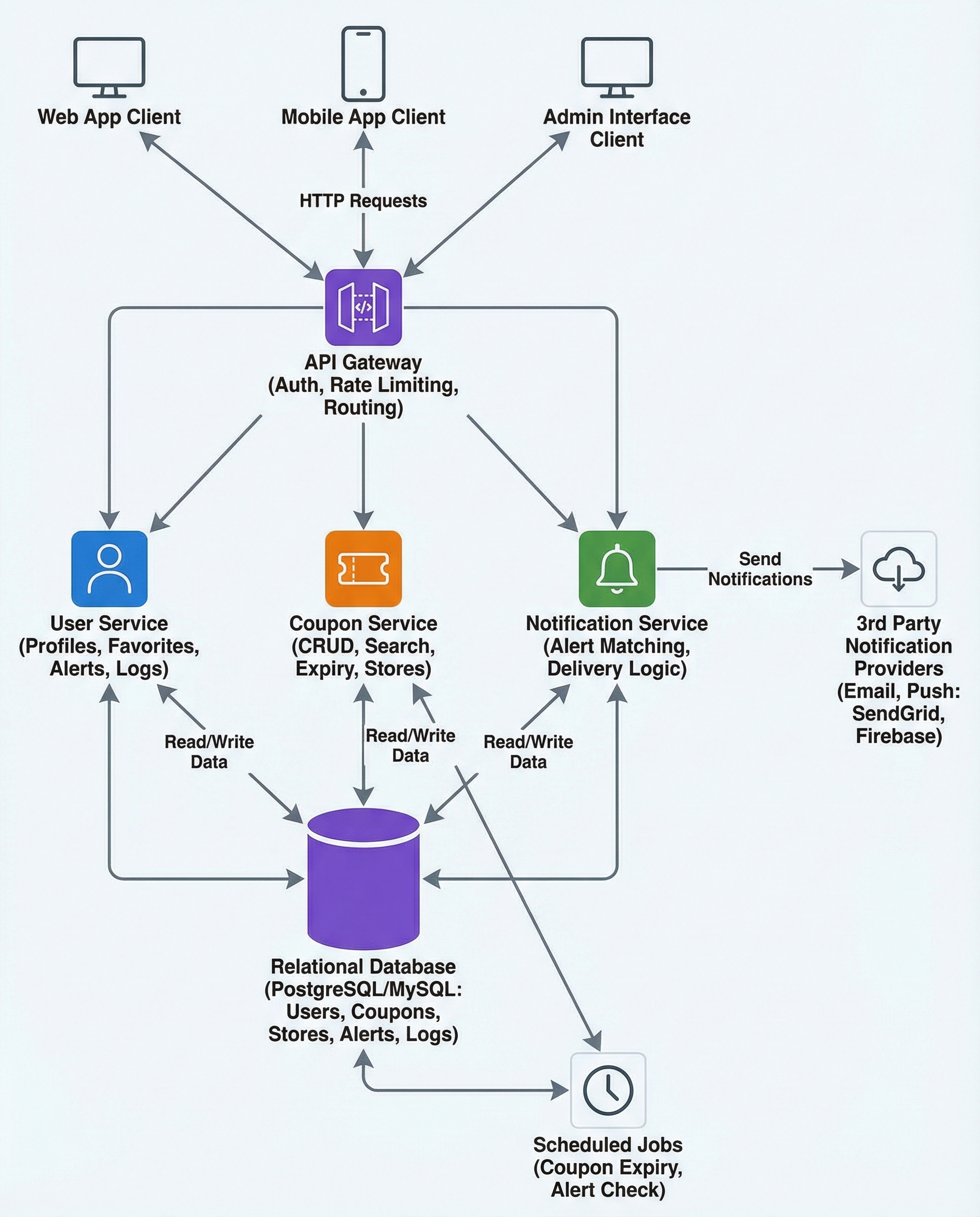
In a Coupons & Deals platform, “expiry” is not just a UI label — it’s a core data contract that touches correctness, performance, and reporting. How you model and enforce expiration affects queries, analytics, user experience, and compliance.
Below is a concise, interview-friendly summary of the decisions you should make and why they matter, plus practical implementation patterns and gotchas.
1) Query path: exclude expired by default
Behavior:
- Default search/listing queries should exclude expired coupons.
- Use an indexed expiry field (e.g.,
expiry_date) so the filter is fast and selective.
Why:
- Keeps user-facing search performant and correct (users shouldn't see unusable coupons).
- Prevents accidentally applying expired coupons in checkout logic.
Implementation notes:
- Add a persistent boolean or computed field like
is_activeif your DB supports it, but still keepexpiry_dateas the source of truth. - In SQL: create a composite index on
(is_active, expiry_date)or onexpiry_datealone ifis_activeis derived. - In document stores: use a TTL index for automatic deletes if you want hard-deletes after a retention period (see Cleanup).
Example (SQL):
SELECT * FROM coupons WHERE expiry_date > CURRENT_TIMESTAMP AND active = TRUE ORDER BY priority DESC, expiry_date ASC;
2) State model: mark as expired (don’t delete immediately)
Behavior:
- When
expiry_datepasses, change the coupon state toexpired(soft-delete style) instead of immediate hard delete.
Why:
- Preserves historical data for analytics, audits, and dispute resolution.
- Enables investigation of incidents (e.g., "Why was this applied?" or "Was this coupon active at this timestamp?").
Recommended fields:
created_at,starts_at,expiry_datestateenum:draft,active,scheduled,expired,archived,deletedexpired_attimestamp (when the system marked it expired)deleted_attimestamp for eventual hard-deletion
3) Cleanup: archive/purge after a retention window
Behavior:
- Run scheduled jobs (daily/weekly) to move expired coupons into an archive or to purge them after a retention window.
Why:
- Keeps primary indexes and tables small for performance.
- Satisfies storage cost and compliance requirements while preserving data for a defined period.
Options:
- Archive to a cost-effective store (S3/parquet) for long-term analytics.
- Use DB partitioning by date and drop old partitions.
- Use TTL indexes (MongoDB) or scheduled jobs to delete after retention.
Retention policy considerations:
- Business/Legal retention requirements
- Audit and dispute windows
- GDPR/CCPA: implement a path for user data removal that can override retention when necessary
4) Indexing & performance tips
- Index
expiry_date(or a combined index with other common filters) to allow the DB to skip expired rows quickly. - Consider maintaining a materialized view or denormalized table for active coupons used in high-throughput queries.
- Cache active coupons carefully and invalidate cache when state changes (or use short TTLs).
- For search engines (Elasticsearch): exclude expired docs at ingestion or use a filter that’s cheap to evaluate.
5) Analytics & reporting
- Keep expired coupons in your analytics DB long enough to analyze redemption rates over time.
- Store the coupon state transitions in an event log so you can reconstruct the state at any historical point (useful for billing disputes and A/B testing).
- Tag analytic events with the coupon version/id and the coupon
expiry_dateso joins are straightforward.
6) Edge cases & gotchas
- Timezones & clock skew: store timestamps in UTC and compare against server/DB time. Be explicit about whether
expiry_dateis inclusive or exclusive (e.g., expires at 00:00:00 UTC of the given date). - Grace periods: business might want a short grace window for UX reasons — implement explicitly, not implicitly.
- Overlapping promos & stacking rules: expired coupons must not interact with stacking logic.
- Race conditions at checkout: validate coupon validity again at redemption time (server-side) even if shown as active in the UI.
- Compliance: users’ right-to-be-forgotten requests may require earlier deletion of records; have a process to reconcile with analytics needs.
7) What to say in interviews (concise checklist)
When asked about coupon expiry, state explicitly:
- "Expiry is a data contract affecting correctness (can't apply expired coupons), performance (filter/index), and reporting (analytics & audits)."
- Describe default query behavior: "Exclude expired items by default; index expiry_date."
- Describe state management: "Mark as expired (soft-delete) and retain for a configured retention window to support audits."
- Describe cleanup: "Archive or purge via scheduled jobs/TTL after retention, and handle compliance exceptions."
- Mention edge cases: timezone, race conditions at checkout, cache invalidation, and legal retention or deletion requirements.
This hits technical design, operational concerns, and compliance — the areas interviewers want to hear about.
8) Example data model (JSON-like)
{ "id": "coupon_123", "code": "SUMMER20", "starts_at": "2026-06-01T00:00:00Z", "expiry_date": "2026-06-30T23:59:59Z", "state": "expired", "expired_at": "2026-07-01T00:00:00Z", "created_at": "2026-05-01T12:00:00Z", "deleted_at": null n}
Final takeaway
Treat expiry as a first-class data design problem, not a cosmetic UI tag. In interviews, call out the three pillars: query behavior (performance/correctness), durable state model (analytics/auditability), and cleanup/retention (costs/compliance). That concise framing shows you understand both system design and operational realities.
#SystemDesign #BackendEngineering #DataEngineering
About the author
bugfree.ai is an advanced AI-powered platform designed to help software engineers master system design and behavioral interviews. Whether you’re preparing for your first interview or aiming to elevate your skills, bugfree.ai provides a robust toolkit tailored to your needs. Key Features:
150+ system design questions: Master challenges across all difficulty levels and problem types, including 30+ object-oriented design and 20+ machine learning design problems. Targeted practice: Sharpen your skills with focused exercises tailored to real-world interview scenarios. In-depth feedback: Get instant, detailed evaluations to refine your approach and level up your solutions. Expert guidance: Dive deep into walkthroughs of all system design solutions like design Twitter, TinyURL, and task schedulers. Learning materials: Access comprehensive guides, cheat sheets, and tutorials to deepen your understanding of system design concepts, from beginner to advanced. AI-powered mock interview: Practice in a realistic interview setting with AI-driven feedback to identify your strengths and areas for improvement.
bugfree.ai goes beyond traditional interview prep tools by combining a vast question library, detailed feedback, and interactive AI simulations. It’s the perfect platform to build confidence, hone your skills, and stand out in today’s competitive job market. Suitable for:
New graduates looking to crack their first system design interview. Experienced engineers seeking advanced practice and fine-tuning of skills. Career changers transitioning into technical roles with a need for structured learning and preparation.
Comments
Join the discussionNo comments yet. Be the first to comment.