
Behavioral interviews are an essential part of the hiring process, especially for roles in major tech companies. They are designed to evaluate whether a candidate’s past experiences align with the role, assess their growth potential, and determine if they’re a good cultural fit for the company.
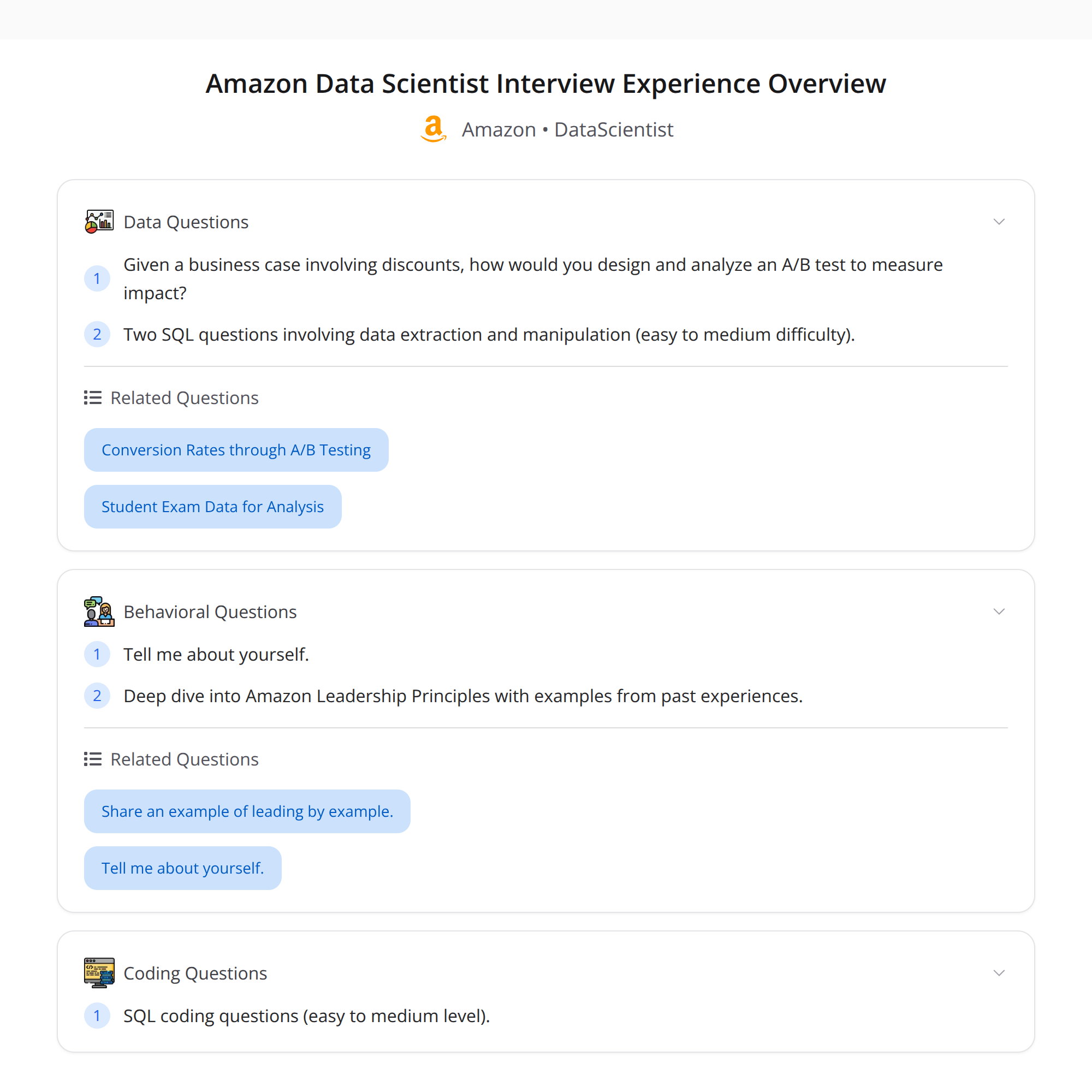
Below’s a typical behavior question learning path.
Behavior Question Learning Path
Common Behavioral Interview Questions
Based on recent trends in behavioral interviews at large tech companies in North America, I’ve compiled a list of high-frequency question types and topics. For candidates at the senior level and below, questions usually focus on these areas:
- Past Experience: Describe a project you consider successful and explain your role in it. This type of question helps demonstrate the scope of your project experience and highlights the impact you’ve had within your team.
- Career Development: Explain why you’re looking for a new job. This is a chance to show your motivation and goals, reinforcing that you’re not just seeking an easy path but are genuinely interested in growth and new challenges.
- Conflict Resolution: Describe how you handle conflicts or disagreements at work. This is an opportunity to showcase your teamwork skills, communication style, and problem-solving abilities.
For a more detailed breakdown of each question type, I’ve listed additional information on bugfree.
For senior-level roles and above, expect questions about leadership and team management as well. These topics require a separate discussion, as they involve more complex experiences and responsibilities.
Structuring Your Answers: The STARL Method
While “Career Development” questions are generally more straightforward to answer, as they primarily focus on motivation, questions about “Past Experience” and “Conflict Resolution” benefit from a structured response. A popular and effective approach is the STARL method:
- Situation: Describe the context or background of the story.
- Task: Outline the specific task or challenge you faced.
- Action: Explain the actions you took to address the task.
- Result: Share the outcome of your actions.
- Learning: Reflect on what you learned from the experience.
Many interviewers will implicitly apply this framework to evaluate your responses, even if you don’t explicitly use it yourself. A well-structured answer using STARL can help ensure that you cover all necessary details and present a coherent story.
Example Responses and Practice
I have attached common questions with example answer at https://bugfree.ai/behavior , you can use it as reference.
About the author
bugfree.ai is an advanced AI-powered platform designed to help software engineers master system design and behavioral interviews. Whether you’re preparing for your first interview or aiming to elevate your skills, bugfree.ai provides a robust toolkit tailored to your needs. Key Features:
150+ system design questions: Master challenges across all difficulty levels and problem types, including 30+ object-oriented design and 20+ machine learning design problems. Targeted practice: Sharpen your skills with focused exercises tailored to real-world interview scenarios. In-depth feedback: Get instant, detailed evaluations to refine your approach and level up your solutions. Expert guidance: Dive deep into walkthroughs of all system design solutions like design Twitter, TinyURL, and task schedulers. Learning materials: Access comprehensive guides, cheat sheets, and tutorials to deepen your understanding of system design concepts, from beginner to advanced. AI-powered mock interview: Practice in a realistic interview setting with AI-driven feedback to identify your strengths and areas for improvement.
bugfree.ai goes beyond traditional interview prep tools by combining a vast question library, detailed feedback, and interactive AI simulations. It’s the perfect platform to build confidence, hone your skills, and stand out in today’s competitive job market. Suitable for:
New graduates looking to crack their first system design interview. Experienced engineers seeking advanced practice and fine-tuning of skills. Career changers transitioning into technical roles with a need for structured learning and preparation.
Comments
Join the discussionNo comments yet. Be the first to comment.