Ace Your System Design Interview: Top Mock Platforms & Resources
System design interviews can feel intimidating — they test big-picture thinking, trade-off analysis, and the ability to design scalable, reliable systems under pressure. The good news: with focused practice and the right tools, you can build strong intuition and interview-ready confidence.
Below are the best mock platforms, how to use them, a compact study plan, and a checklist of core concepts to master.
Why mock interviews matter
- Simulate real interview conditions (time pressure, ambiguous requirements).
- Improve communication: explaining trade-offs clearly is often as important as the design itself.
- Receive structured feedback to identify blind spots and refine explanations.
- Build mental models for recurring patterns (caching, sharding, message queues, etc.).
Top platforms and resources
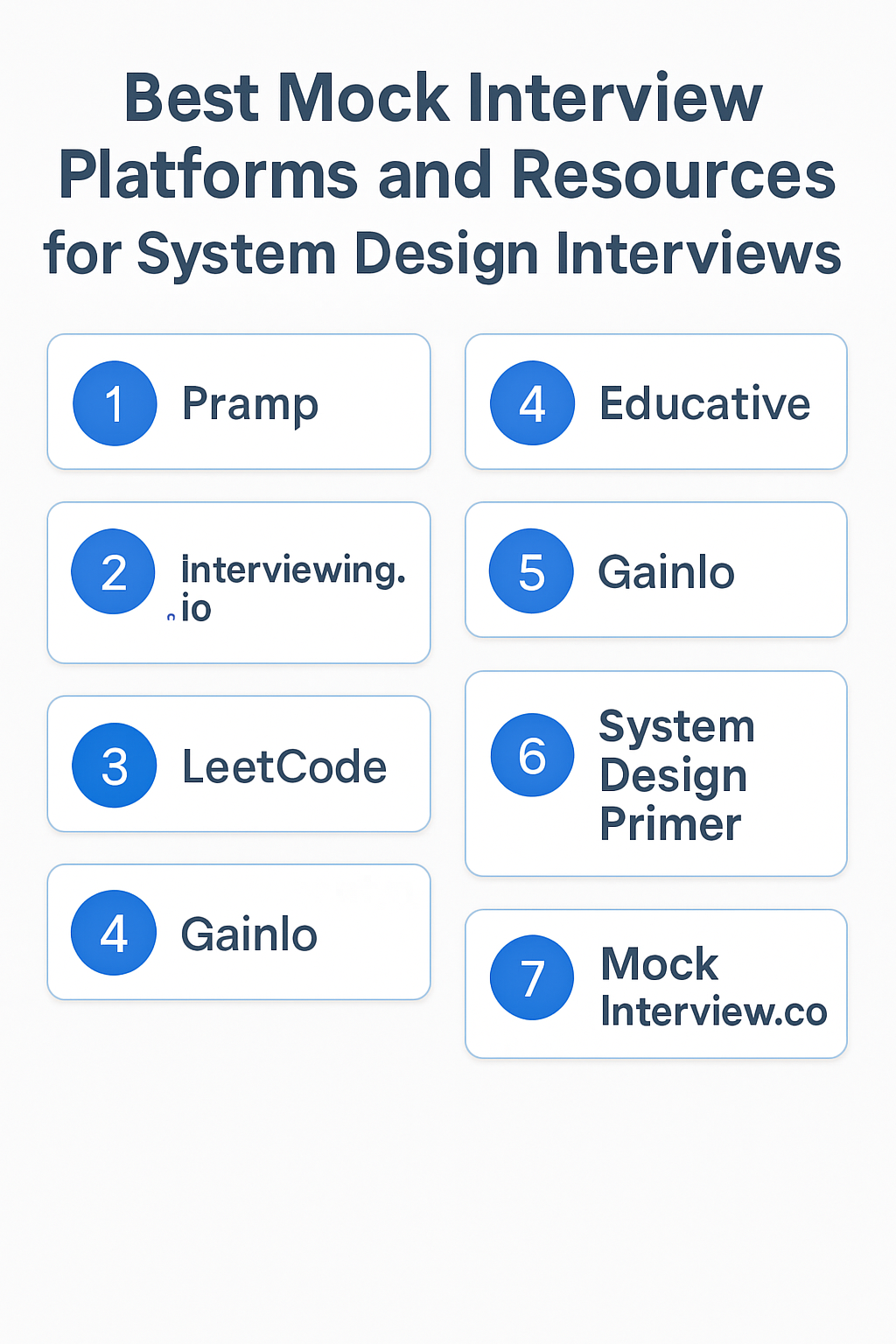
- Pramp — Peer-to-peer mock interviews with live feedback. Great for practicing conversation and iterative design.
- Interviewing.io — Anonymous, live mock interviews with engineers from top companies; sometimes offers real interview opportunities.
- LeetCode — System-design section + frontend/backend problems; combine with algorithm practice for rounded prep.
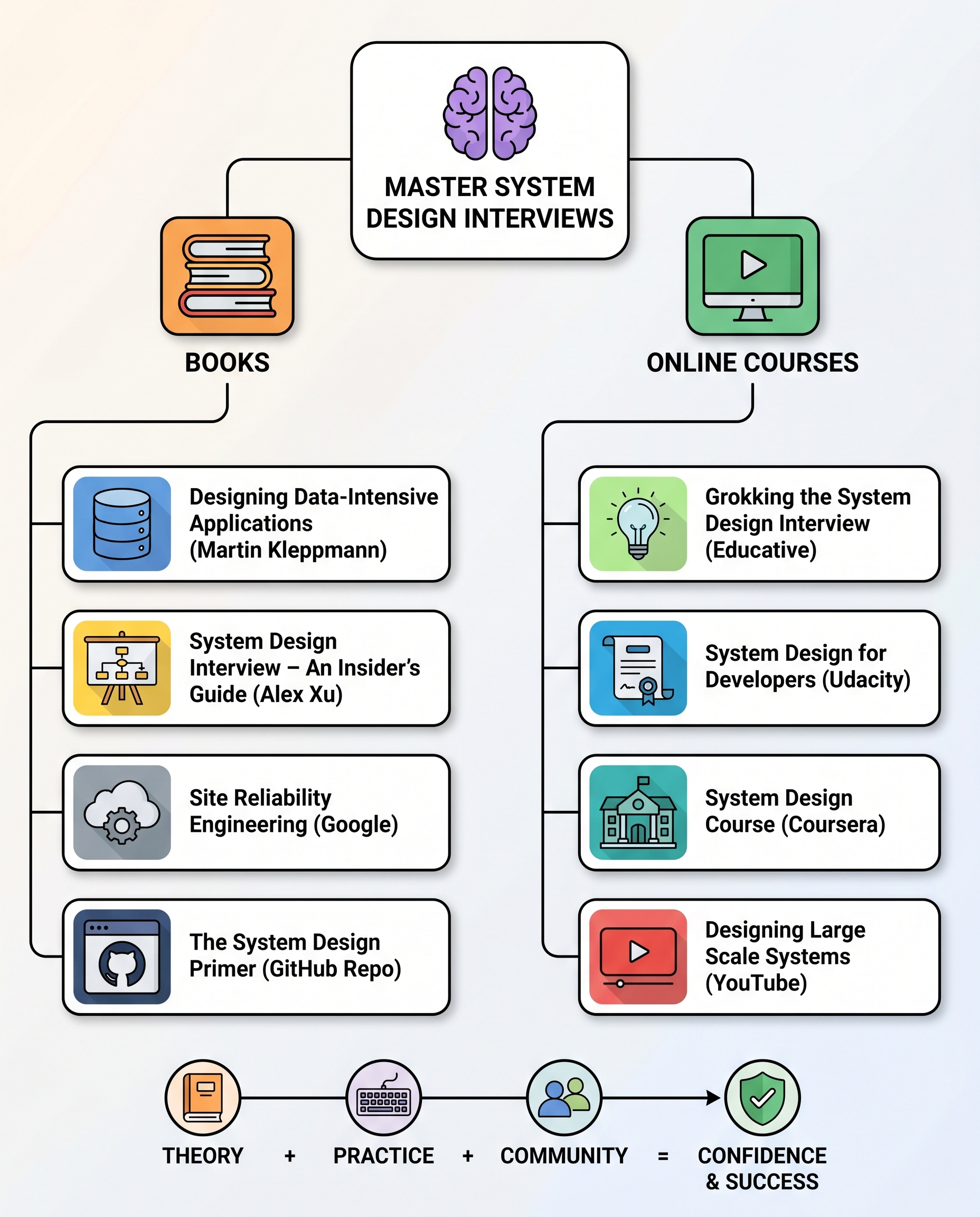
- Educative — In-depth interactive courses like "Grokking the System Design Interview" and practical walkthroughs.
- Gainlo — Paid mock interviews with experienced interviewers; useful for company-specific simulations.
- MockInterview.co — Flexible mock sessions and feedback-focused practice.
- System Design Primer (GitHub) — Comprehensive open-source notes, patterns, and exercises. A must-read reference.
(Use a mix of peer practice, professional mocks, and self-study to get the best outcomes.)
How to use these platforms effectively
- Start with learning materials: read the System Design Primer or a course to understand core concepts and pattern catalogs.
- Do structured mocks: schedule 1–2 mock interviews per week; alternate peer interviews (Pramp) with pro mocks (Interviewing.io/Gainlo).
- Record or take notes: capture designs, diagrams, and feedback. Review them to track progress.
- Focus feedback loops: after each mock, list 2–3 concrete improvements and work on them before the next session.
- Practice whiteboarding and diagramming: clarity matters — practice drawing quick, readable system diagrams.
4-week focused study plan (example)
Week 1 — Foundations
- Read System Design Primer and an overview/course chapter.
- Study scalability primitives: load balancers, caching, CDNs, databases (SQL vs NoSQL).
- Do 2 peer mocks focusing on communication.
Week 2 — Data and storage
- Deep dive: indexing, replication, sharding, partitioning, consistency models.
- Practice designing data models for common systems (social feed, e-commerce catalog).
- 1 pro mock + 1 peer mock.
Week 3 — Resilience & messaging
- Study queues, pub/sub, event sourcing, retries, rate limiting, circuit breakers.
- Design systems emphasizing reliability (notification system, job processing).
- 2 mocks focusing on trade-offs and failure modes.
Week 4 — End-to-end comps & polish
- Design high-level end-to-end systems (chat, streaming, search) under timed conditions.
- Focus on performance, cost, and operational concerns (monitoring, SLOs).
- Final pro mock and review prior feedback.
Key concepts checklist
- Requirements gathering & scope definition
- High-level architecture and component responsibilities
- Data modeling and storage choices
- Caching strategies and cache invalidation
- Load balancing and service discovery
- Sharding, replication, and consistency
- Message queues, async processing, and backpressure
- Rate limiting, throttling, and QoS
- Fault tolerance, retries, and graceful degradation
- Monitoring, logging, and alerting (SLO/SLI basics)
- Security, authentication, and authorization
- Trade-offs, cost estimates, and incremental rollout strategies
Mock-interview etiquette & how to get the most from feedback
- Start by clarifying requirements and constraints.
- Think aloud: interviewers evaluate your approach, not only the final design.
- Ask about scale, traffic patterns, and latency expectations.
- Summarize trade-offs at the end and propose next steps.
- When receiving feedback: ask for examples, prioritize recurring issues, and practice targeted improvements.
Final tips
- Be consistent: frequent short practice beats last-minute cramming.
- Focus on communication as much as technical depth.
- Use diagrams that are simple, labeled, and focused on the critical paths.
- Track progress with recorded sessions or a feedback journal.
Further reading & links
- System Design Primer (GitHub)
- Grokking the System Design Interview (Educative)
- LeetCode system design problems
- Pramp, Interviewing.io, Gainlo, MockInterview.co
Start practicing today: schedule a mock, work through a focused system design problem, and iterate on feedback. With steady practice, you’ll sharpen your intuition and enter interviews with confidence.
About the author
bugfree.ai is an advanced AI-powered platform designed to help software engineers master system design and behavioral interviews. Whether you’re preparing for your first interview or aiming to elevate your skills, bugfree.ai provides a robust toolkit tailored to your needs. Key Features:
150+ system design questions: Master challenges across all difficulty levels and problem types, including 30+ object-oriented design and 20+ machine learning design problems. Targeted practice: Sharpen your skills with focused exercises tailored to real-world interview scenarios. In-depth feedback: Get instant, detailed evaluations to refine your approach and level up your solutions. Expert guidance: Dive deep into walkthroughs of all system design solutions like design Twitter, TinyURL, and task schedulers. Learning materials: Access comprehensive guides, cheat sheets, and tutorials to deepen your understanding of system design concepts, from beginner to advanced. AI-powered mock interview: Practice in a realistic interview setting with AI-driven feedback to identify your strengths and areas for improvement.
bugfree.ai goes beyond traditional interview prep tools by combining a vast question library, detailed feedback, and interactive AI simulations. It’s the perfect platform to build confidence, hone your skills, and stand out in today’s competitive job market. Suitable for:
New graduates looking to crack their first system design interview. Experienced engineers seeking advanced practice and fine-tuning of skills. Career changers transitioning into technical roles with a need for structured learning and preparation.
Comments
Join the discussionNo comments yet. Be the first to comment.