# Hospital System OOD: Stop Modeling IDs—Model Relationships
# Hospital System OOD: Stop Modeling IDs—Model Relationships
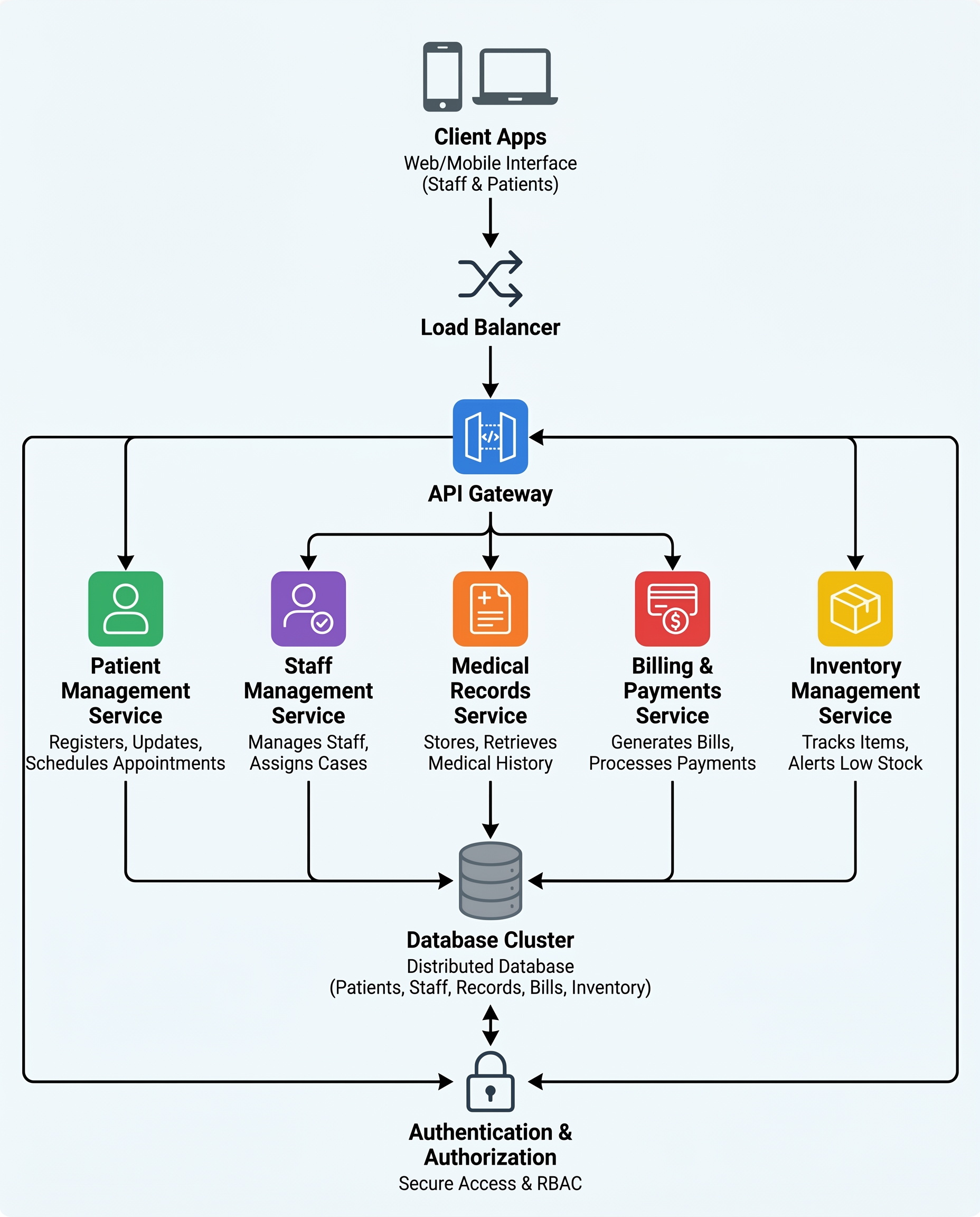 Too many designs start by naming fields: patientID, staffID, appointmentID. Those are storage details, not domain concepts. In object-oriented design (OOD) — especially in interviews — model the relationships and business rules first. Let IDs be an implementation detail you add only after you understand ownership, lifecycle, and invariants.
## The principle
Design around domain relationships and responsibilities, not around unique identifiers. A relationship-first model forces you to answer important questions:
- Who owns what? (ownership)
- When can something be created/removed? (lifecycle)
- What rules must always hold? (invariants)
Once those are clear, tables and APIs follow trivially.
## Common relationships in a hospital system
- Patient has many Appointments
- Staff (doctors, nurses) has many Appointments
- Patient has many MedicalRecords
- Patient has many Bills
- Appointment references exactly one Patient and exactly one Staff
Modeling these explicitly makes you define ownership: e.g., MedicalRecord is conceptually owned by a Patient (who can have multiple records); an Appointment is a relationship between a Patient and Staff with its own lifecycle.
## Example invariants and lifecycle rules
- Appointment must reference exactly one Patient and one Staff.
- Appointment status transitions: Scheduled → (Completed | Cancelled). Some transitions may be forbidden (e.g., Completed → Scheduled).
- MedicalRecord entries are append-only; edits require explicit amendment records or versioning.
- A Bill belongs to a Patient; payment state transitions (Unpaid → PartiallyPaid → Paid) should be explicit.
Explicitly listing these invariants helps you reason about validation, transactions, and concurrency.
## From relationships to APIs and tables (an approach)
1. Draw the domain relationships (boxes + lines). Annotate multiplicities and ownership.
2. For each entity, define lifecycle events and allowed state transitions.
3. Implement business logic in domain methods that enforce invariants.
4. Map to persistence: add IDs and foreign keys to represent relationships.
5. Expose REST/GraphQL APIs that mirror domain operations rather than raw CRUD on IDs.
Example pseudo-classes (conceptual):
class Patient
- name
- contactInfo
- appointments: List
- medicalRecords: List
class Staff
- name
- role
- appointments: List
class Appointment
- patient: Patient
- staff: Staff
- scheduledAt
- status // Scheduled, Completed, Cancelled
- reschedule(newTime) { /* validate transitions */ }
- complete() { /* set status and enforce rules */ }
And the persistence mapping is straightforward once relationships are clear:
appointments table
- id
- patient_id -- FK to patients
- staff_id -- FK to staff
- scheduled_at
- status
medical_records table
- id
- patient_id
- record_data
- created_at
bills table
- id
- patient_id
- amount
- status
Note: IDs appear here as implementation details (primary keys / foreign keys), but your domain design should have been done before you decide on these columns.
## Interview tips
- Start by drawing relationships, not tables. Use boxes for aggregates and arrows for ownership.
- Call out invariants and allowed state transitions on your diagram.
- Describe who owns deletion rights: can a Patient be deleted? What happens to their MedicalRecords and Bills?
- Explain how your domain methods enforce invariants (do not rely solely on DB constraints).
- Only after the model is clear, sketch the APIs and persistence schema.
## Benefits of this approach
- Clearer reasoning about business rules, ownership, and consistency.
- Fewer surprises when you implement workflows or enforce validation.
- APIs that reflect real use cases (e.g., cancelAppointment(patient, appointmentId) instead of deleteById).
- Easier to spot transactional boundaries and concurrency issues.
## Summary
Stop leading with IDs. Model relationships, lifecycles, and invariants first. Once the domain is explicit, IDs, tables, and APIs are just a straightforward mapping from that model.
#ObjectOrientedDesign #SystemDesign #SoftwareEngineering
Too many designs start by naming fields: patientID, staffID, appointmentID. Those are storage details, not domain concepts. In object-oriented design (OOD) — especially in interviews — model the relationships and business rules first. Let IDs be an implementation detail you add only after you understand ownership, lifecycle, and invariants.
## The principle
Design around domain relationships and responsibilities, not around unique identifiers. A relationship-first model forces you to answer important questions:
- Who owns what? (ownership)
- When can something be created/removed? (lifecycle)
- What rules must always hold? (invariants)
Once those are clear, tables and APIs follow trivially.
## Common relationships in a hospital system
- Patient has many Appointments
- Staff (doctors, nurses) has many Appointments
- Patient has many MedicalRecords
- Patient has many Bills
- Appointment references exactly one Patient and exactly one Staff
Modeling these explicitly makes you define ownership: e.g., MedicalRecord is conceptually owned by a Patient (who can have multiple records); an Appointment is a relationship between a Patient and Staff with its own lifecycle.
## Example invariants and lifecycle rules
- Appointment must reference exactly one Patient and one Staff.
- Appointment status transitions: Scheduled → (Completed | Cancelled). Some transitions may be forbidden (e.g., Completed → Scheduled).
- MedicalRecord entries are append-only; edits require explicit amendment records or versioning.
- A Bill belongs to a Patient; payment state transitions (Unpaid → PartiallyPaid → Paid) should be explicit.
Explicitly listing these invariants helps you reason about validation, transactions, and concurrency.
## From relationships to APIs and tables (an approach)
1. Draw the domain relationships (boxes + lines). Annotate multiplicities and ownership.
2. For each entity, define lifecycle events and allowed state transitions.
3. Implement business logic in domain methods that enforce invariants.
4. Map to persistence: add IDs and foreign keys to represent relationships.
5. Expose REST/GraphQL APIs that mirror domain operations rather than raw CRUD on IDs.
Example pseudo-classes (conceptual):
class Patient
- name
- contactInfo
- appointments: List
- medicalRecords: List
class Staff
- name
- role
- appointments: List
class Appointment
- patient: Patient
- staff: Staff
- scheduledAt
- status // Scheduled, Completed, Cancelled
- reschedule(newTime) { /* validate transitions */ }
- complete() { /* set status and enforce rules */ }
And the persistence mapping is straightforward once relationships are clear:
appointments table
- id
- patient_id -- FK to patients
- staff_id -- FK to staff
- scheduled_at
- status
medical_records table
- id
- patient_id
- record_data
- created_at
bills table
- id
- patient_id
- amount
- status
Note: IDs appear here as implementation details (primary keys / foreign keys), but your domain design should have been done before you decide on these columns.
## Interview tips
- Start by drawing relationships, not tables. Use boxes for aggregates and arrows for ownership.
- Call out invariants and allowed state transitions on your diagram.
- Describe who owns deletion rights: can a Patient be deleted? What happens to their MedicalRecords and Bills?
- Explain how your domain methods enforce invariants (do not rely solely on DB constraints).
- Only after the model is clear, sketch the APIs and persistence schema.
## Benefits of this approach
- Clearer reasoning about business rules, ownership, and consistency.
- Fewer surprises when you implement workflows or enforce validation.
- APIs that reflect real use cases (e.g., cancelAppointment(patient, appointmentId) instead of deleteById).
- Easier to spot transactional boundaries and concurrency issues.
## Summary
Stop leading with IDs. Model relationships, lifecycles, and invariants first. Once the domain is explicit, IDs, tables, and APIs are just a straightforward mapping from that model.
#ObjectOrientedDesign #SystemDesign #SoftwareEngineering